

Published: Updated: Eric Hlutke 20 min read


The top 24/7 security operations center service providers for regulated mid-market companies in 2027 are CompassMSP, Arctic Wolf, eSentire, Rapid7, Deepwatch, Binary Defense, UnderDefense, Thrive, BitLyft, and Huntress. Every one of them will watch your environment at 3 a.m. Far fewer will stop the attacker, fix the weakness that let them in, and hand your auditor proof that the door is closed. That gap between an alert and an answer is what this ranking measures.
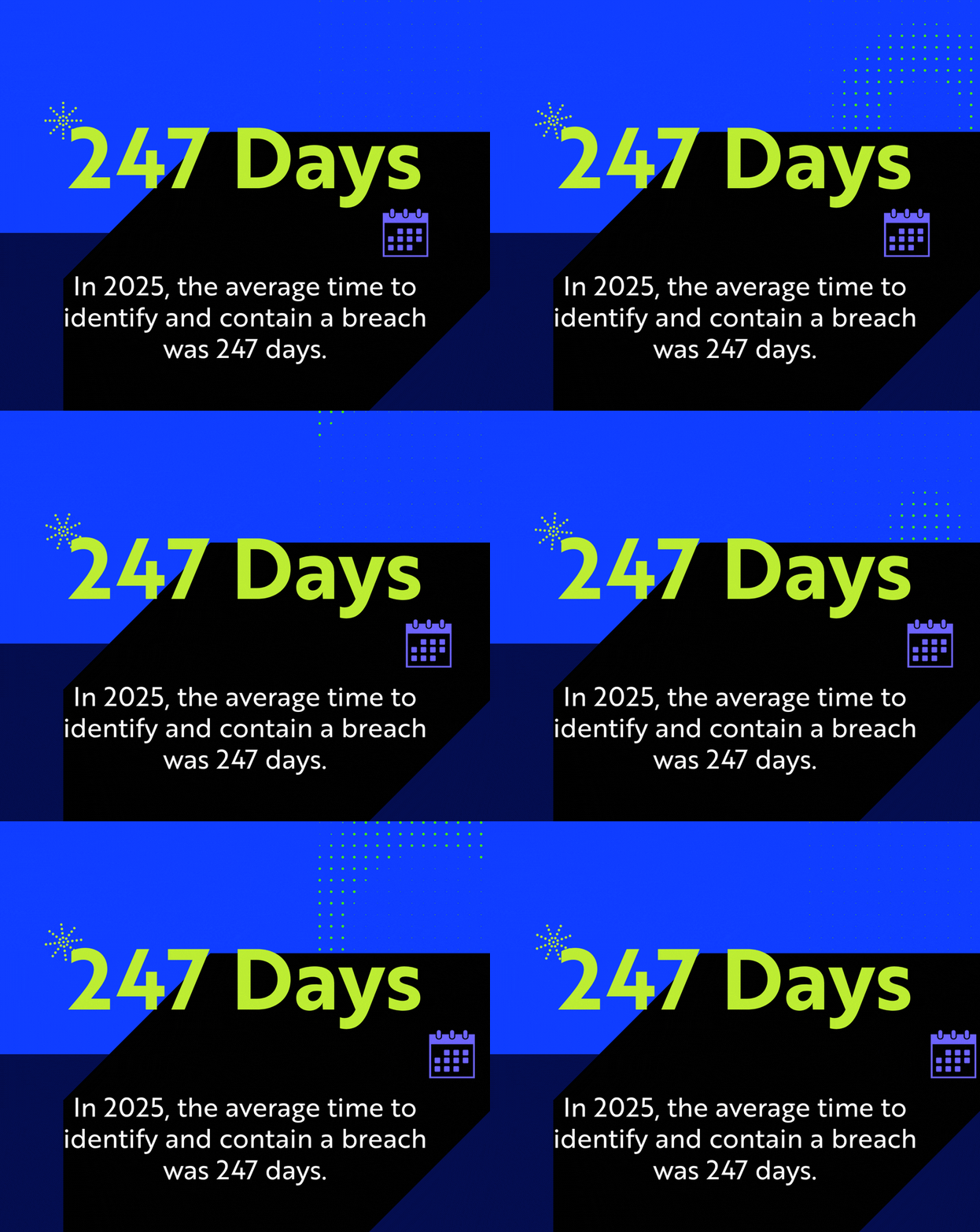
That difference carries a cost. IBM's 2026 Cost of a Data Breach Report found that the mean time to identify and contain a breach rose to 247 days, the first increase in five years. The same report put the average healthcare breach at $6.64 million and the average financial services breach at $6.29 million. For a regulated business, the clock that matters starts when the provider confirms a threat, and it ends when an auditor or insurer accepts the evidence.
This guide ranks SOC-as-a-Service providers for IT leaders at regulated organizations with roughly 20 to 1,000 endpoints. If you are comparing managed detection and response (MDR) vendors on incident response alone, start with our unranked guide to MDR providers for incident response.
Quick answer: the best 24/7 SOC provider for each need
- CompassMSP is the best overall choice for regulated mid-market companies that want a U.S.-based SOC, compliance evidence, and IT remediation under one accountable team.
- Arctic Wolf is the best choice for organizations that want a named concierge security team and broad log coverage across network, endpoint, and cloud.
- eSentire is the best choice for organizations that want unlimited threat hunting and incident handling inside the MDR subscription.
- Rapid7 is the best choice for teams that want the SOC, a SIEM, and vulnerability management in one bundle.
- Deepwatch is the best choice for upper mid-market organizations that want AI-assisted MDR with a dedicated squad of analysts.
- Binary Defense is the best choice for security teams that want analyst-led threat hunting from a practitioner-founded firm.
- UnderDefense is the best choice for organizations that want an AI-driven SOC layered over the tools they already own.
- Thrive is the best choice for organizations that want a combined MSP and MSSP with a global SOC and NOC.
- BitLyft is the best choice for smaller organizations that need SIEM-as-a-Service with automated response.
- Huntress is the best choice for small businesses that buy security through their existing managed service provider.
Top 24/7 SOC providers compared
CompassMSP scores highest because it pairs a U.S.-based managed security operations center with compliance evidence and IT remediation from the same team. Scores run from 1 (weak or undocumented) to 5 (demonstrated and publicly described), and the methodology below explains each weight.
|
Rank |
Provider |
Best for |
Monitoring depth (25%) |
Incident response (25%) |
Compliance support (30%) |
Mid-market fit (20%) |
Weighted score |
|---|---|---|---|---|---|---|---|
|
1 |
CompassMSP |
Regulated mid-market firms that want SOC, compliance, and IT under one team |
4 |
5 |
5 |
5 |
4.8 |
|
2 |
Arctic Wolf |
Concierge-style security operations with broad log coverage |
5 |
4 |
4 |
4 |
4.3 |
|
3 |
eSentire |
Unlimited threat hunting and incident handling |
5 |
5 |
3 |
3 |
4.0 |
|
4 |
Rapid7 |
SOC, SIEM, and vulnerability management in one bundle |
4 |
5 |
3 |
3 |
3.8 |
|
5 |
Deepwatch |
Upper mid-market teams that want AI-assisted MDR with a named squad |
5 |
4 |
3 |
2 |
3.6 |
|
6 |
Binary Defense |
Analyst-led threat hunting |
4 |
4 |
3 |
3 |
3.5 |
|
7 |
UnderDefense |
An AI-driven SOC over an existing security stack |
3 |
4 |
4 |
2 |
3.4 |
|
8 |
Thrive |
A combined MSP and MSSP with a global SOC and NOC |
3 |
3 |
3 |
4 |
3.2 |
|
9 |
BitLyft |
SIEM-as-a-Service with automated response for smaller teams |
3 |
3 |
3 |
3 |
3.0 |
|
10 |
Huntress |
Small businesses that buy security through an MSP |
3 |
3 |
2 |
4 |
2.9 |
Scores reflect each provider's publicly described services as of October 2026. Confirm scope, response authority, and contract terms with every finalist before you sign.
How we ranked these security operations center providers
We scored each provider on four weighted criteria that reflect how regulated mid-market companies buy and use a 24/7 SOC. Compliance support carries the most weight because an incident at a regulated company ends with an auditor, an insurer, or a regulator asking for proof.
|
Criterion |
Weight |
What earns a 5 |
|---|---|---|
|
Compliance support |
30% |
The provider maps its monitoring and incident records to named frameworks such as HIPAA, CMMC, PCI DSS, SOC 2, and NYDFS Part 500, and it helps produce audit-ready evidence. |
|
Monitoring depth |
25% |
Analysts watch endpoint, identity, network, and cloud telemetry around the clock and validate alerts before they reach your team. |
|
Incident response |
25% |
Analysts can contain threats directly, investigate root cause, and preserve forensic evidence with chain of custody. |
|
Mid-market fit |
20% |
The service is built for organizations with roughly 20 to 1,000 endpoints and a lean internal IT team. |
We based every score on the provider's own service descriptions, its published documentation, and independent coverage available in October 2026. CompassMSP publishes this guide, and the editorial note at the end explains how we handled that conflict.
The 10 best 24/7 SOC providers for 2027
1. CompassMSP: Best overall 24/7 SOC for regulated mid-market companies
Best for: Regulated organizations with 20 to 1,000 endpoints that want human oversight, compliance evidence, and IT remediation from one accountable partner.
CompassMSP delivers 24/7 security operations center services through its Apex Security Platform. The SOC is in-house and 100% U.S.-based: detection, triage, investigation, and containment are performed by Compass analysts who are U.S. persons working in U.S. facilities, with no offshore subcontracting. Compass delivers the SOC as a managed service, so clients work with analysts who explain each threat and act on it.
Two tiers anchor the service. Core Defense provides 24/7 monitoring across endpoint, identity, and cloud, AI-assisted triage with analyst validation, proactive threat hunting, a 15-minute response target, and monthly leadership reporting. Complete Security adds dedicated analyst support, continuous forensics, MITRE ATT&CK-mapped threat hunting, a 10-minute acknowledgment target, and root-cause reporting with chain of custody that auditors, insurers, and boards accept.
The main differentiator is the closed-loop model. Compass runs five connected phases: Understand, Build, Operate, Respond, and Strengthen. When Compass also manages your IT, the team that confirms a threat has the administrative access to contain it, patch the weakness, and verify the fix. The Compass Command Center supplies the shared account intelligence behind that loop, connecting each security finding to your environment documentation and to the people responsible for the change.
Compliance is built into the same model. Compass's Compliance & Risk Management practice supports HIPAA, HITRUST, PCI DSS, SOC 2, GDPR, CMMC, NIST CSF, NIST SP 800-171, FINRA, and NYDFS Part 500. Compass is a Cyber AB Registered Practitioner Organization for CMMC readiness, and it provides HIPAA and HITRUST risk analysis, gap assessments, and certification support. Because Compass operates the systems your controls live on, monitoring records, incident timelines, and patch history become audit evidence as a byproduct of daily work.
Key features
- The 100% U.S.-based SOC keeps telemetry, forensic artifacts, and chain-of-custody records inside a U.S.-only handling chain, which supports data residency expectations under CMMC, DFARS, and ITAR.
- Human analysts validate every alert before it reaches your team, so IT staff see confirmed threats with clear next steps.
- Continuous forensics on Complete Security records activity before an alert fires, so analysts can reconstruct what an attacker did and whether data left the environment.
- vCISO advisory turns SOC findings into governance decisions, risk registers, and board reporting.
- Incident response is available to clients and non-clients, and Complete Security clients receive priority engagement at preferred rates.
Pros
- One team owns detection, containment, remediation, and the compliance evidence, which removes the handoff where most incident response stalls.
- Analysts are U.S. persons in U.S. facilities, which answers the personnel and data residency questions that appear in DFARS reviews and security questionnaires.
- Compass reports a 97% client satisfaction rating.
- Compliance coverage spans ten frameworks, and an in-house vCISO bench supports audits and assessor interviews.
Cons
- The service fits organizations with roughly 20 to 1,000 endpoints, so very small businesses and large enterprises are better served elsewhere.
- Compass cybersecurity works best when it is bundled with Compass Managed IT, because the closed loop depends on the same team owning remediation. Security-only engagements are available, but remediation then passes back to your internal team or current provider.
- Compass runs as a managed service without a self-serve console, so teams that want to run their own SIEM console and tune their own detections should look at a platform vendor.
Proof point: A confidential manufacturing client has filed zero cyber insurance claims since adopting Compass's forensic-led cybersecurity, and Burke Aerospace reached full alignment with CMMC requirements to keep its DoD contract eligibility.
2. Arctic Wolf: Best for a concierge security operations model
Best for: Mid-sized and larger organizations that want a named security team and broad log coverage.
Arctic Wolf delivers MDR through its cloud-native Aurora platform, with 24x7 monitoring across network, endpoint, and cloud environments. Most customers are assigned a Concierge Security Team, a named group of security operations experts who act as the main point of contact. A separate triage team investigates alerts around the clock. Arctic Wolf also offers a Security Operations Warranty on qualifying plans.
Key features
- The Aurora platform collects and retains logs in a cloud data lake for analysis, compliance, and reporting.
- A named Concierge Security Team builds a security roadmap with each customer over time.
- Standard and custom compliance reports support frameworks such as PCI, HIPAA, and NIST.
Pros
- Customers keep the same named experts, which builds context about their environment.
- Log coverage spans network, endpoint, and cloud sources.
- The company holds a large base of peer reviews on Gartner Peer Insights.
Cons
- Arctic Wolf states that it provides security operations and does not co-manage the environment, so patching and configuration fixes stay with your IT team.
- Arctic Wolf notes that the majority of customers, though not all, receive a named Concierge Security Team.
- Some reviewers report that the relationship felt less like an extension of their team than the sales process suggested.
3. eSentire: Best for unlimited threat hunting and incident handling
Best for: Regulated organizations that want deep incident response capability inside the MDR contract.
eSentire is one of the longest-running pure-play MDR providers, founded in 2001 and based in Waterloo, Canada. It sells 24/7 SOC-as-a-Service with unlimited threat hunting and incident handling, and it reports more than 2,000 customers. Its top package adds Cyber Risk Advisors who help mature the customer's security program.
Key features
- Multi-signal MDR integrates with more than 300 technologies, so it can work with an existing stack.
- The Atlas portal shows customers what the SOC sees and how each investigation is progressing.
- eSentire publishes a HIPAA Security Rule checklist that maps its services to administrative and technical safeguards.
Pros
- Threat hunting and incident handling are unlimited in the subscription.
- The customer base leans toward financial services, healthcare, and legal, so analysts know regulated workflows.
- Incident response depth rivals some dedicated IR firms, according to independent reviews.
Cons
- Independent reviews describe pricing as premium compared with cloud-native competitors.
- eSentire does not operate the customer's IT, so remediation work after containment stays with internal staff or another provider.
- Compliance documentation support is lighter than a provider with a dedicated compliance practice.
4. Rapid7: Best for SOC, SIEM, and vulnerability management in one bundle
Best for: Security teams that want to consolidate monitoring, SIEM, and exposure management with one vendor.
Rapid7 sells its MDR service as Managed Threat Complete. The bundle combines a 24/7 SOC with the InsightIDR SIEM, vulnerability management, threat hunting, and digital forensics and incident response. IDC named Rapid7 a Leader in its 2026 MarketScape for worldwide MDR services for the midmarket, citing unlimited incident response across all tiers.
Key features
- Every Managed Threat Complete tier includes unlimited incident response through eradication and root cause analysis.
- Vulnerability and exposure management runs alongside detection, so the SOC sees weaknesses before attackers use them.
- Essential, Advanced, and Ultimate tiers let buyers scale coverage.
Pros
- One subscription replaces several separate tools and contracts.
- Unlimited incident response removes a common surprise cost.
- Analyst recognition from IDC supports the midmarket positioning.
Cons
- The service works best on the Rapid7 platform and its Insight Agent.
- The volume of vulnerability and log data can require internal expertise to act on.
- Compliance reporting is available, but framework-specific evidence and audit support are not the core of the offer.
5. Deepwatch: Best for AI-assisted MDR with a dedicated squad
Best for: Upper mid-market and enterprise security teams with complex, multi-tool environments.
Deepwatch describes itself as AI-native MDR governed by experienced security experts. Its NEXA agentic AI ecosystem surfaces critical alerts, while a named team of analysts, which Deepwatch calls its Squad Model, handles each customer's monitoring. The company also offers managed EDR, vulnerability management, managed firewall, continuous threat exposure management, and active response.
Key features
- NEXA agentic investigations prioritize high-risk alerts for human analysts.
- The Squad Model assigns a consistent team to each customer.
- Active response lets analysts contain threats across the customer's existing tools.
Pros
- Integrations with major platforms, including CrowdStrike and Splunk, suit multi-vendor stacks.
- A named analyst team keeps context about the environment.
- Service lines extend from MDR into exposure management.
Cons
- The company's stated mission centers on protecting enterprise networks, so smaller teams may find it more than they need.
- Compliance reporting is not positioned as a lead capability.
- Deepwatch does not run day-to-day IT, so fixes after an incident need another owner.
6. Binary Defense: Best for analyst-led threat hunting
Best for: Mid-market and enterprise security teams that want a practitioner-led SOC with strong threat hunting.
Binary Defense is an MDR provider founded by security practitioner David Kennedy. It offers SOC-as-a-Service, threat hunting, and counterintelligence, delivered by SOC analysts, threat hunters, and detection engineers who work around the clock. In 2026 the company launched NightBeacon, an AI-driven platform built into its own SOC to speed investigations.
Key features
- Human-led threat hunting searches for attackers that automated tools miss.
- The NightBeacon platform automates repetitive investigation steps so analysts focus on judgment calls.
- Counterintelligence services watch for threats aimed at the customer outside its network.
Pros
- The founding team has deep offensive and defensive security experience.
- Reviewers praise analysts who own tickets instead of forwarding raw alerts.
- The service suits teams that want to augment an existing security function.
Cons
- Add-ons such as deception, digital risk protection, and incident response retainers are priced separately, according to third-party buyer guides.
- Compliance documentation is not a primary service line.
- Binary Defense does not provide day-to-day IT operations.
7. UnderDefense: Best for an AI-driven SOC over an existing stack
Best for: Mid-to-large organizations running multi-vendor or hybrid environments.
UnderDefense runs its MAXI platform on top of the customer's existing SIEM, EDR, cloud, and identity tools. AI agents triage and investigate incoming alerts, while human analysts handle escalations. The company also sells compliance automation and vCISO services as separate offerings.
Key features
- AI agents triage alerts across the customer's current tools without forcing a migration.
- The MAXI Compliance module supports frameworks such as SOC 2 and ISO 27001.
- Incident response analysts work active incidents as part of the engagement.
Pros
- Customers keep the security tools they already own.
- Compliance automation and the SOC are available from one vendor.
- Every investigation step is logged, which helps with post-incident review.
Cons
- The company has less name recognition than larger MDR providers.
- Its own materials position it toward mid-to-large enterprises.
- vCISO and compliance services are separate engagements from the SOC, which can limit shared context.
8. Thrive: Best for a combined MSP and MSSP with a global SOC
Best for: Small and mid-market organizations that want managed IT and security from one large provider.
Thrive is a managed service provider and managed security service provider founded in 2000 in Concord, Massachusetts. It runs a 24x7x365 SOC and NOC, and its NextGen platform, built on ServiceNow, standardizes operations across clients. In 2026 Thrive added Elastic and Cato Networks integrations to strengthen its MDR and zero trust services.
Key features
- MDR, managed SIEM, managed firewall, and vulnerability management sit inside one MSP relationship.
- Advisory roles include vCIO, vCISO, and Microsoft 365 advisors.
- The Thrive5 Methodology guides clients from assessment through ongoing managed services.
Pros
- One provider can run both IT and security, which shortens remediation.
- Compliance services are part of the portfolio.
- Private equity investment funds a broad and growing service catalog.
Cons
- Thrive describes its SOC and NOC as global, so buyers with U.S.-only personnel requirements should confirm where analysts sit.
- Growth through acquisition can mean uneven service experience across regions.
- Framework-specific compliance evidence is less prominent in Thrive's public materials than in a dedicated compliance practice. For a side-by-side view, read CompassMSP vs. Thrive.
9. BitLyft: Best for SIEM-as-a-Service with automated response
Best for: Smaller organizations, utilities, and higher education teams that need a managed SIEM and SOC on a tight budget.
BitLyft is a Michigan-based MDR provider that delivers SIEM-as-a-Service and SOC-as-a-Service through its BitLyft AIR platform. The platform combines SIEM, a SOC, automated incident response, and threat intelligence. BitLyft holds a SOC 2 Type II report and partners with Graylog for its SIEM layer.
Key features
- BitLyft AIR runs pre-built automated response workflows without scripting.
- The managed SIEM provides 24/7/365 log collection and monitoring.
- Compliance reporting is automated through the platform.
Pros
- The service suits teams that need a SIEM without the staff to run one.
- Automated response shortens the time from detection to action.
- The company focuses on smaller organizations that larger providers often underserve.
Cons
- BitLyft is a smaller firm with less scale than national providers.
- Compliance support centers on automated reporting, and BitLyft does not advertise readiness assessments or audit preparation.
- BitLyft does not operate the customer's IT environment.
10. Huntress: Best for small businesses buying through an MSP
Best for: Small businesses and the MSPs that support them.
Huntress combines managed EDR, identity threat detection, managed SIEM, security awareness training, and posture management with a 24/7 human-led, AI-assisted SOC. The company reports protecting more than 270,000 organizations, and most customers buy Huntress through their managed service provider. Huntress reports an average mean time to respond of about eight minutes for its managed EDR.
Key features
- Managed SIEM adds log monitoring and compliance reporting at a flat rate.
- Managed ITDR protects Microsoft 365 and Google Workspace identities.
- Analysts send written remediation steps and can isolate infected hosts.
Pros
- Deployment is fast because the platform uses a lightweight agent.
- Pricing follows a simple per-endpoint or per-identity model.
- The research team publishes widely used threat intelligence.
Cons
- Most customers depend on an MSP for deployment and cleanup.
- Huntress describes its SOC as global, so U.S.-only personnel requirements need confirmation.
- Compliance support is limited to SIEM reporting, with no readiness or audit advisory.
What each compliance framework expects from your 24/7 SOC
Every major framework that regulated mid-market companies face asks for continuous security monitoring, documented incident response, and records that prove both happened. The table shows what each one expects and the question to put to every SOC provider on your shortlist.
|
Framework |
What it expects from monitoring and response |
What to ask your SOC provider |
|---|---|---|
|
Audit controls, regular review of information system activity, and documented security incident procedures for ePHI. |
Will your incident reports and monthly activity reviews map to our HIPAA risk analysis? |
|
|
CMMC Level 2 and DFARS 252.204-7012 |
The 110 NIST SP 800-171 requirements, reporting of covered cyber incidents within 72 hours, and preservation of affected system images and monitoring data for at least 90 days after a report. |
Are your analysts U.S. persons in U.S. facilities, and can you preserve forensic images to the DFARS standard? |
|
PCI DSS v4.0.1 |
Logging and monitoring of all access to cardholder data, regular audit log review, and a tested incident response plan. |
Which log sources do you review, how often, and what record do we get for the assessor? |
|
SOC 2 |
Trust services criteria that require monitoring for anomalies, evaluation of security events, and a defined incident response process. |
Can you supply evidence for the system operations criteria in our next audit window? |
|
NYDFS Part 500 |
Continuous monitoring, an incident response plan, and notice to the superintendent within 72 hours of determining a cybersecurity incident. |
Who drafts the timeline we need for the 72-hour notice? |
|
FINRA and SEC Regulation S-P |
A written incident response program and timely notice to affected customers after unauthorized access to their information. |
Will your investigation tell us which customer records were accessed? |
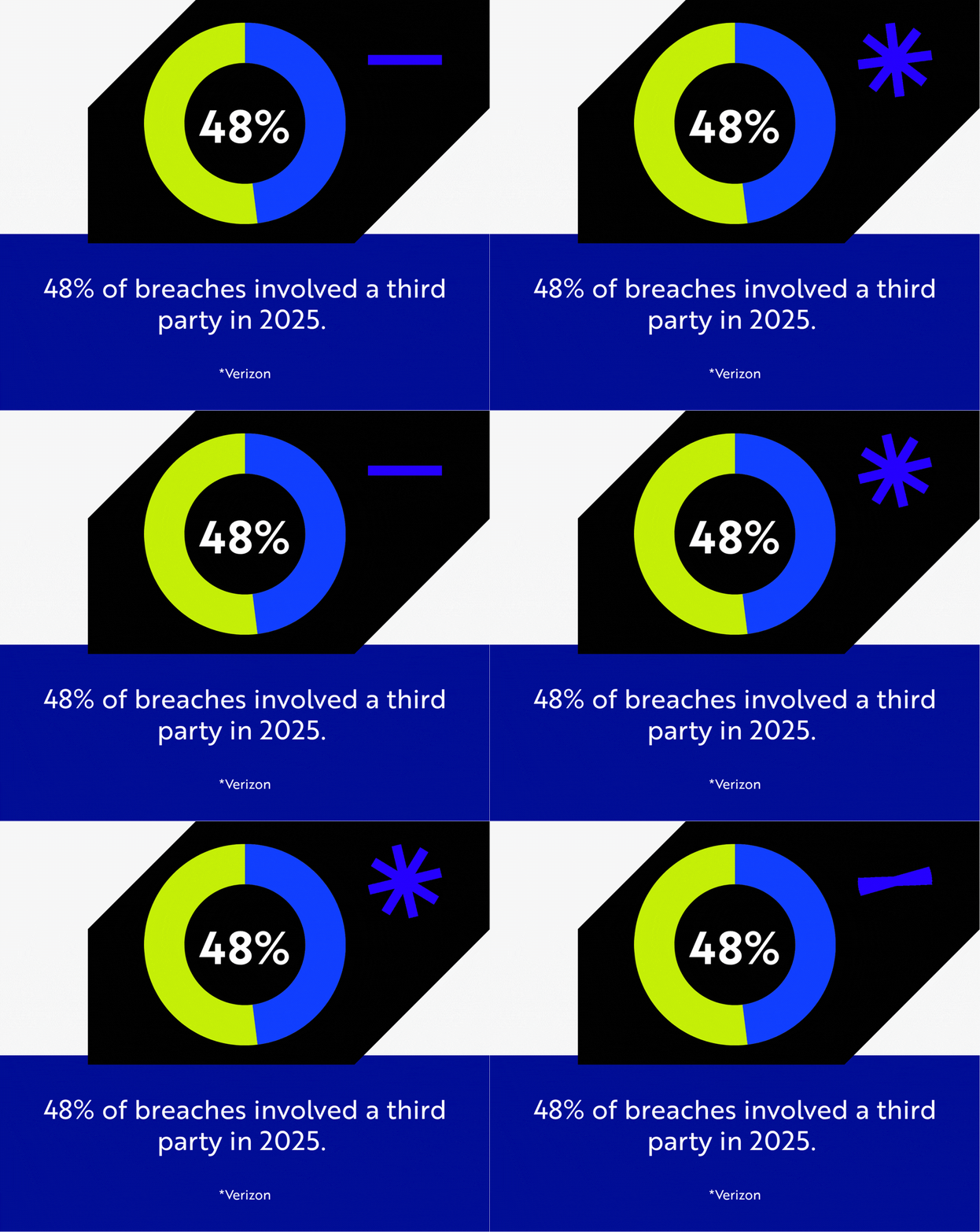
Third parties now sit inside most breaches. The 2026 Verizon Data Breach Investigations Report found that 48% of breaches involved a third party, up 60% from the prior year. Your SOC provider becomes one of those third parties, so its own controls, personnel location, and evidence handling belong in your vendor review.
For framework-specific guidance, see Compass resources on the NYDFS Part 500 ransomware update, what SEC examiners ask for under Regulation S-P, and the current CMMC status, or subscribe to the Fine Print Quarterly Compliance Newsletter.
How to choose a 24/7 SOC provider for a regulated business
The right managed security operations center for a regulated mid-market company is the one that can contain a threat, fix the cause, and hand you the evidence. Use these six steps to narrow a shortlist.
- Map your compliance obligations first. List every framework, contract clause, and insurer requirement that applies, then ask each provider to show the specific records its SOC produces for each one. Our guide on how to evaluate an MSSP for compliance covers the documents to request.
- Confirm what the analysts can do at 2 a.m. Ask whether analysts can isolate a device, disable a compromised account, and block traffic without waiting for your approval. A provider that only sends alerts leaves the hardest work with your team.
- Ask who fixes the cause after containment. Patching, configuration changes, and backup restores often fall between the SOC and your IT provider. Our comparison of MSPs, MSSPs, and vCISOs explains where that gap opens, and the DFIR gap article shows what it costs.
- Verify where the analysts sit. CMMC, DFARS, and ITAR obligations can require you to know who touches your environment and from where. A global follow-the-sun model may not satisfy those reviews.
- Separate response targets. Acknowledgment, investigation, and containment are different measurements, so ask for each in writing.
- Score every finalist the same way. Use one weighted scorecard and one realistic incident scenario for every provider. Our MSP and MSSP RFP template and 10 red flags when hiring a 24/7 SOC provider give you the questions.
If you are weighing a provider that bundles SOC, vCISO, and compliance work, read how to evaluate bundled cybersecurity services before you compare proposals.

Eric Hlutke
Eric is a security executive and leader. He helps organizations protect what matters most: their operations, their data, and their reputation. Eric leads security and advisory services at CompassMSP. He builds security programs that align protection with business goals.