

Published: Updated: Paul Breitenbach 17 min read


There's a version of compliance that lives in a binder on a shelf, reviewed once a year, updated before audits, and forgotten in between. Regulators used to tolerate it. They don't anymore. For businesses operating under HIPAA, NYDFS, SOC 2, or CMMC, compliance has shifted from a documentation exercise into a continuous operational requirement with real teeth.
CompassMSP helps regulated businesses align their IT infrastructure with compliance requirements through managed IT services that combine 24/7 monitoring, cybersecurity expertise, and ongoing compliance advisory. This guide walks you through everything you need to evaluate managed IT providers for legal compliance, from understanding what compliance-ready IT actually looks like to selecting a partner that fits your regulatory environment.
Whether your business handles protected health information under HIPAA, financial data under NYDFS or SOC 2, or sensitive client information subject to attorney-client privilege, you'll find practical guidance for building an IT foundation that supports both compliance and growth.
Key Takeaways: Managed IT for Legal Compliance in 2026
- Regulated SMBs face unique IT challenges because compliance frameworks require documented controls, audit trails, and ongoing evidence collection.
- Managed IT services reduce compliance burden by handling technical controls, 24/7 monitoring, and documentation that internal teams can't maintain alone.
- CompassMSP combines managed IT with compliance advisory to help regulated businesses achieve and maintain certifications like HIPAA, SOC 2, and NYDFS.
- Provider evaluation should focus on industry expertise, support coverage, incident response capabilities, and alignment with your specific regulatory requirements.
- 24/7 technical support and proactive monitoring protect sensitive data while minimizing downtime that affects both operations and compliance posture.
What Does Legal Compliance Mean for IT Infrastructure?
Legal compliance in the IT context refers to maintaining systems, processes, and controls that meet the requirements of applicable regulations and industry standards. For regulated SMBs, this typically spans multiple overlapping frameworks.
HIPAA governs how healthcare organizations and their business associates handle protected health information. NYDFS Part 500 establishes cybersecurity requirements for financial services companies in New York. SOC 2 certification demonstrates that your organization has implemented controls across security, availability, processing integrity, confidentiality, and privacy.
PCI DSS applies to any business that processes, stores, or transmits credit card data. For companies working with the Department of Defense supply chain, CMMC (Cybersecurity Maturity Model Certification) adds another layer of requirements tied to controlled unclassified information.
The common thread across these frameworks: they all require documented controls, access management, encryption, monitoring, incident response procedures, and evidence that you're actually doing what your policies say you're doing.

Why Regulated SMBs Need Managed IT Services for Compliance
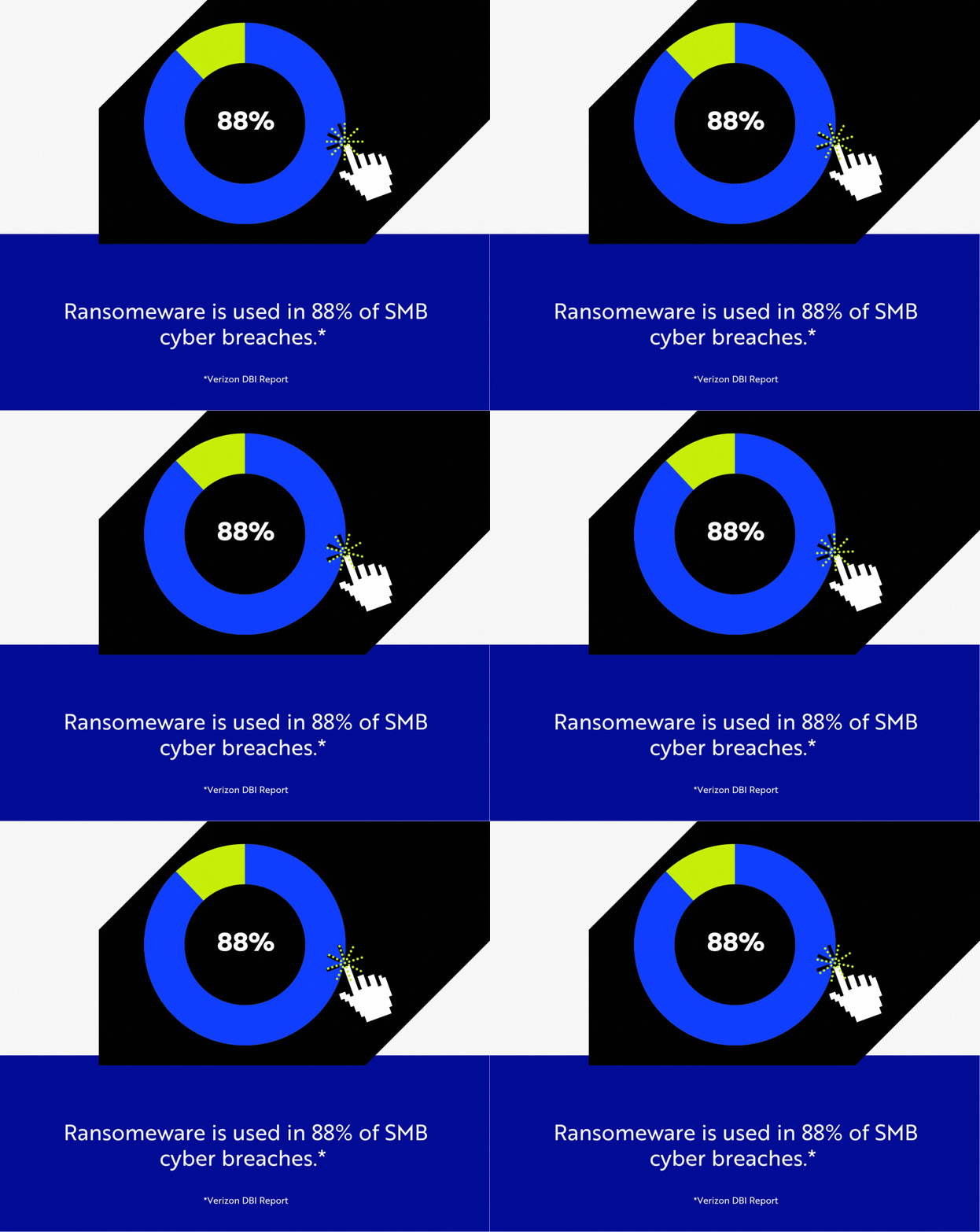
Internal IT teams at small and midsized businesses face a fundamental capacity problem. According to theVerizon 2025 Data Breach Investigations Report, ransomware was present in 88% of SMB breaches, compared to just 39% at larger enterprises. That gap reflects the reality that smaller organizations tend to have weaker incident response capabilities, slower patch cycles, and under-resourced security teams. These are the exact vulnerabilities attackers are actively exploiting.
At the same time, compliance requirements keep expanding. A single IT generalist or small team can't maintain expert-level knowledge across the many specialized disciplines required to run a modern, compliant business. You need specialists in network security, endpoint protection, identity management, backup and disaster recovery, cloud infrastructure, and compliance documentation.
The Compliance Documentation Gap
Most compliance frameworks require more than just having the right technology in place. You need evidence that controls are working, logs showing who accessed what data and when, and documentation proving that your policies translate into actual practice.
This documentation burden creates operational drag. When your IT person spends hours gathering evidence for auditors, they're not addressing help desk tickets, monitoring for threats, or planning infrastructure improvements. Managed IT services address this gap by building evidence collection and documentation into ongoing operations.
24/7 Coverage Requirements
Compliance regulations increasingly assume around-the-clock protection. HIPAA's Security Rule requires covered entities to implement procedures for monitoring log-in attempts and reporting discrepancies. NYDFS Part 500 mandates monitoring for intrusions.
Your internal IT person doesn't work 24/7. Neither do most small IT teams. But cyberattacks don't respect business hours. According to Mandiant's M-Trends 2025 Report, the global median dwell time for ransomware-related intrusions stands at six days overall, with adversary-notified events resolving in as few as five days. That speed means attackers can move from initial access to full deployment before many organizations even detect a problem.
How Managed IT Services Support Legal Compliance
A managed service provider (MSP) becomes an extension of your IT operations, handling day-to-day technical work while bringing specialized compliance expertise that most SMBs can't hire internally. Here's how that translates to compliance support.
Technical Control Implementation
Compliance frameworks specify technical controls, but implementing them correctly requires expertise. Managed IT services handle the deployment and configuration of encryption, multi-factor authentication, endpoint detection and response (EDR), security information and event management (SIEM), and access controls that form the foundation of compliance.
CompassMSP delivers managed cybersecurity through a 24/7 Security Operations Center (SOC) with human-led managed detection and response. This means trained analysts are reviewing alerts and investigating potential threats, not just automated systems generating noise.
Ongoing Monitoring and Incident Response
Compliance isn't a one-time achievement. Your controls need to work consistently, and you need to detect and respond to incidents according to documented procedures. Managed IT services deliver monitoring with defined escalation paths and incident response protocols.
When a potential security event occurs, response time matters. CompassMSP's SOC analysts maintain an average reaction time under 15 minutes for high-severity threats, which directly affects your ability to contain incidents and meet regulatory notification requirements.
Documentation and Audit Support
Every compliance framework requires documentation. System security plans, policies, procedures, access logs, change management records, risk assessments, and evidence of control effectiveness all need to be current, accurate, and accessible when auditors come calling.
Managed IT services build this documentation into standard operations. When your provider handles patch management, they're also logging what was patched and when. When they manage user provisioning, they're creating audit trails that prove access controls are working as designed.
Evaluating Managed IT Providers for Legal Compliance
Not all managed IT providers are equipped to support compliance in regulated industries. Some focus primarily on break-fix support or basic monitoring without the specialized expertise that compliance demands. Here's what to evaluate when selecting a provider for a regulated environment. For a more detailed framework, see CompassMSP's 12-question guide to choosing a managed IT provider for regulated SMBs.
Industry-Specific Compliance Experience
Ask potential providers which compliance frameworks they support and how many clients they currently serve in your specific regulatory environment. A provider that primarily serves retail businesses will have different expertise than one focused on healthcare or financial services.
Request references from clients in similar industries and with similar compliance requirements. Ask those references about audit outcomes, documentation quality, and how the provider has helped them address compliance gaps.
Support Coverage and Response Times
Verify the provider's support model. Is their help desk available 24/7, or only during business hours? Where are their support personnel located? What are their service level agreements for response and resolution times?
For compliance purposes, you also need to understand their incident response capabilities. How quickly can they escalate a potential breach? Do they have defined procedures for evidence preservation and forensic investigation?
Security Operations Capabilities
Evaluate whether the provider operates their own security operations center or relies on third-party tools without human oversight. Ask about their detection capabilities, threat intelligence sources, and how they differentiate between false positives and genuine threats.
CompassMSP operates a U.S.-based SOC with human-led managed detection and response (MDR), meaning real analysts investigate alerts rather than relying solely on automated systems. This human element is critical for compliance because it ensures proper incident classification and response.
Compliance Advisory Services
Technical implementation is only part of the compliance picture. You also need policy development, risk assessments, gap analysis, and ongoing guidance as regulations evolve. Some managed IT providers focus purely on technology, leaving compliance advisory to other consultants.
Providers like CompassMSP integrate compliance advisory services with managed IT, offering vCISO (virtual Chief Information Security Officer) guidance and support for frameworks including HIPAA, SOC 2, PCI DSS, NYDFS, and CMMC. This integration means your compliance and technical teams are aligned rather than operating in silos.
Critical Compliance Capabilities to Look for in a Managed IT Provider
Beyond general service offerings, specific capabilities determine whether a provider can actually support your compliance requirements. Evaluate providers against these criteria.
Access Management and Identity Controls
Every major compliance framework requires documented access controls. Your provider should offer identity and access management services, including multi-factor authentication deployment, privileged access management, automated user provisioning and deprovisioning, and regular access reviews.
Ask how they handle terminated employee accounts. The lag between someone leaving your organization and their access being revoked creates compliance risk and potential security exposure.
Encryption and Data Protection
Data encryption requirements appear in virtually every compliance framework. Your provider should implement encryption at rest and in transit, manage encryption keys securely, and help you maintain visibility into where sensitive data lives across your environment.
This extends to backup systems. Backup data contains the same sensitive information as production systems and requires the same encryption and access controls.
Vulnerability Management
Compliance frameworks expect you to identify and remediate vulnerabilities in a timely manner. Your managed IT provider should conduct regular vulnerability scanning, prioritize remediation based on risk, and maintain documentation showing that vulnerabilities are being addressed according to policy.
Ask about their patch management process. How quickly do they deploy critical security patches? How do they handle legacy systems that can't be patched without breaking applications?
Business Continuity and Disaster Recovery
Compliance requirements address not just data protection but also availability. You need documented backup procedures, tested recovery processes, and defined recovery time objectives. Your provider should manage backup systems, conduct regular recovery tests, and maintain documentation proving that your backup strategy actually works.
Attorney-Client Privilege and Legal Industry IT Requirements
Law firms and legal departments face unique compliance pressures beyond general cybersecurity frameworks. Attorney-client privilege imposes ethical obligations to protect confidential client communications and information. A breach that exposes privileged information can result in malpractice claims, bar association sanctions, and irreparable damage to client relationships.
State bar associations across the country are tightening their expectations. What started as isolated state-level mandates is quickly becoming a national trend, with regulators increasingly treating technology-driven data protection as a core component of attorney competence standards. For a closer look at how these trends are developing, see CompassMSP's analysis of how new cybersecurity mandates are reshaping obligations for law firms nationwide.
Ethical Obligations and Technology
The American Bar Association's Model Rule 1.6 requires lawyers to make reasonable efforts to prevent inadvertent or unauthorized disclosure of client information. Comments to this rule explicitly address technology, noting that lawyers must take reasonable precautions when transmitting information electronically.
What constitutes "reasonable precautions" evolves with technology and threat landscapes. A managed IT provider serving legal clients needs to understand these ethical obligations and implement controls that meet the standard of care expected in the legal profession.
Matter-Centric Data Management
Legal organizations typically organize data around client matters rather than departments or projects. This structure affects how access controls need to be configured, how data should be classified, and how retention policies apply.
Your managed IT provider should understand legal workflows well enough to implement appropriate controls without creating friction that drives lawyers to workarounds. When security measures are too cumbersome, people find ways around them, which creates more risk than the controls were designed to prevent.
eDiscovery and Legal Hold Requirements
Litigation and regulatory investigations trigger preservation obligations. When a legal hold is issued, your IT systems need to preserve relevant data and prevent routine deletion processes from destroying evidence.
Managed IT services should support legal hold implementation with the ability to suspend automated deletion, preserve backup copies, and maintain chain of custody documentation for potentially relevant data.
Healthcare Compliance and Managed IT Services
Healthcare organizations operate under HIPAA's Privacy and Security Rules, which establish specific requirements for protecting protected health information (PHI). The HITECH Act added breach notification requirements and increased enforcement penalties, making compliance failures increasingly costly.
HIPAA Security Rule Requirements
The HIPAA Security Rule specifies administrative, physical, and technical safeguards for electronic PHI. Technical safeguards include access controls, audit controls, integrity controls, and transmission security.
Managed IT services address these requirements through identity management, logging and monitoring, encryption, and secure communication tools. A provider experienced in healthcare IT understands the specific implementation requirements and documentation expectations for HIPAA compliance.
Business Associate Relationships
When a managed IT provider handles systems containing PHI, they become a business associate under HIPAA. This means they have direct compliance obligations and liability for breaches caused by their actions or failures.
Ensure your provider signs a Business Associate Agreement (BAA) and understand their compliance posture. Ask about their own security controls, training programs, and incident response procedures. A provider's breach can become your breach.
HITRUST Certification Considerations
Many healthcare organizations pursue HITRUST certification as a way to demonstrate compliance with multiple frameworks including HIPAA. HITRUST CSF incorporates requirements from HIPAA, NIST, ISO, and other standards into a unified framework with defined certification levels.
A managed IT provider can support HITRUST certification by implementing required controls and maintaining documentation. Some providers, including CompassMSP, offer specific compliance advisory services for HITRUST preparation and certification maintenance.
Financial Services Compliance and Managed IT Requirements
Financial services companies face regulatory requirements from multiple sources depending on their specific business activities. Banks, broker-dealers, investment advisors, and insurance companies each have distinct regulatory bodies and frameworks.
NYDFS Cybersecurity Regulation
The New York Department of Financial Services Cybersecurity Regulation (23 NYCRR 500) applies to any entity operating under DFS licensure, including banks, insurance companies, and other financial services firms. Even companies headquartered outside New York must comply if they conduct business with New York clients.
Part 500 requires a written cybersecurity policy, a designated Chief Information Security Officer (or equivalent), penetration testing, vulnerability assessments, access controls, and annual certification of compliance. Recent amendments have strengthened requirements around multi-factor authentication, privileged access management, and ransomware incident notification.
SEC and FINRA Requirements
Broker-dealers and investment advisors face cybersecurity obligations under SEC regulations and FINRA rules. These include requirements for business continuity planning, customer data protection, and vendor management.
The SEC has increasingly focused on cybersecurity in examinations, and recent enforcement actions demonstrate that regulators expect documented controls and evidence of effectiveness. A managed IT provider serving financial services clients should understand these examination priorities and maintain documentation that supports regulatory inquiries.
SOC 2 Certification
SOC 2 has become a baseline expectation for technology service providers in financial services. This certification demonstrates that an organization has implemented controls across security, availability, processing integrity, confidentiality, and privacy.
When selecting a managed IT provider, verify their SOC 2 certification status and review their most recent report. Understand which trust service criteria are covered and whether any exceptions were noted. Your auditors and clients will likely ask about your providers' certifications as part of their vendor risk assessments.
Building a Compliant IT Foundation: A Step-by-Step Approach
Compliance-ready IT infrastructure requires a structured approach. Here's a framework for building or improving your compliance foundation with managed IT support.
Step 1: Assess Your Current State
Before selecting a provider or implementing new controls, understand your current posture. Identify which compliance frameworks apply to your business, document your existing technical controls, and catalog where sensitive data lives across your environment.
Many managed IT providers offer assessment services as part of initial engagement. CompassMSP conducts gap assessments that identify where current controls fall short of regulatory requirements and prioritize remediation based on risk.
Step 2: Define Your Compliance Scope
Compliance scope determines which systems, data, and processes fall under regulatory requirements. For some frameworks like PCI DSS, you can reduce scope by isolating cardholder data environments. For others like HIPAA, scope encompasses any system that creates, receives, maintains, or transmits PHI.
Work with your provider to document compliance scope clearly. This scoping exercise affects everything from control implementation to audit preparation.
Step 3: Implement Technical Controls
Based on gap assessment findings, implement or improve technical controls to meet framework requirements. This typically includes access management improvements, encryption deployment, monitoring and logging enhancements, and backup procedure updates.
Prioritize controls based on risk and regulatory priority. Not everything needs to happen at once, but critical gaps that could result in breach or regulatory penalty should be addressed first.
Step 4: Develop Policies and Procedures
Technical controls need documented policies that describe how controls are implemented, who is responsible for maintaining them, and how compliance is monitored. Procedures translate policies into step-by-step instructions for specific tasks.
Your managed IT provider should help develop policies that align with your regulatory requirements and actual operational practices. Policies that don't match reality create compliance risk when auditors discover gaps between documentation and practice.
Step 5: Establish Ongoing Monitoring and Maintenance
Compliance requires sustained attention over time. Controls need regular testing, vulnerabilities need ongoing scanning and remediation, and documentation needs periodic updates. Define schedules for control testing, access reviews, policy updates, and risk assessments.
Managed IT services build these maintenance activities into ongoing operations. When your provider handles patching, monitoring, and access management as standard services, compliance maintenance becomes embedded in daily operations rather than a separate workstream.
Step 6: Prepare for Audits and Assessments
Most compliance frameworks require periodic audits or assessments. Annual SOC 2 audits, HIPAA risk assessments, and NYDFS certifications all require evidence gathering and documentation review.
Your managed IT provider should support audit preparation by maintaining organized documentation, providing evidence of control effectiveness, and participating in auditor interviews as needed. Providers experienced in your regulatory environment know what auditors expect and can help you avoid common pitfalls.
Common Compliance Mistakes and How Managed IT Services Help Avoid Them
Even well-intentioned compliance programs can fall short. Here are common mistakes that managed IT services help organizations avoid.
Treating Compliance as a One-Time Project
Compliance isn't something you achieve and forget. Regulations evolve, your environment changes, and controls can drift out of effectiveness over time. Organizations that treat compliance as an annual exercise often find themselves scrambling before audits.
Managed IT services embed compliance activities into ongoing operations. When monitoring, patching, and documentation happen on an ongoing basis, your compliance posture remains current rather than degrading between audit cycles.
Neglecting Vendor Risk Management
Your compliance obligations extend to third-party vendors who access your systems or handle your data. A breach at a vendor can trigger your notification obligations and regulatory scrutiny. According to the Verizon 2025 DBIR, third-party involvement in breaches has doubled to 30% over the prior year's report, underscoring how quickly supply chain risks have grown.
Managed IT providers should support vendor risk assessment, helping you evaluate technology vendors' security practices and maintain documentation of due diligence. This becomes especially important as cloud services and SaaS applications proliferate across most organizations.
Inadequate Incident Response Planning
Compliance frameworks expect you to detect, respond to, and recover from security incidents according to documented procedures. Organizations without tested incident response plans often make mistakes during actual incidents that compound damage and regulatory exposure.
Your managed IT provider should help develop, document, and test incident response procedures. Regular tabletop exercises and simulation drills ensure that your team and provider know their roles when incidents occur.
Documentation That Doesn't Match Reality
Auditors look for gaps between written policies and actual practice. If your documentation says access reviews happen quarterly but you can't produce evidence of the last four reviews, that's a finding that affects your compliance status.
Managed IT services help maintain accurate documentation by generating evidence as part of standard operations. When controls are automated and logged, documentation naturally reflects actual practice.
Cost Considerations: Managed IT Services vs. Internal Compliance Teams
Building internal capacity for compliance-ready IT requires significant investment. You need security specialists, compliance analysts, and 24/7 support coverage that most SMBs can't justify as dedicated headcount.
The True Cost of Internal IT Compliance
Consider what compliance-ready internal IT actually requires: cybersecurity expertise for control implementation and monitoring, compliance knowledge for documentation and audit support, 24/7 coverage for incident detection and response, and ongoing training to keep pace with evolving regulations and threats.
According to the U.S. Bureau of Labor Statistics, the median salary for information security analysts reached $124,910 in May 2024, before benefits. Building a team with the depth needed for compliance typically requires multiple specialized roles.
How Managed IT Services Reduce Total Cost
Managed IT services spread specialized expertise across multiple clients, making capabilities that would be prohibitively expensive for a single organization accessible at a fraction of the internal cost. You gain access to security operations center coverage, compliance specialists, and deep technical expertise without building an in-house team.
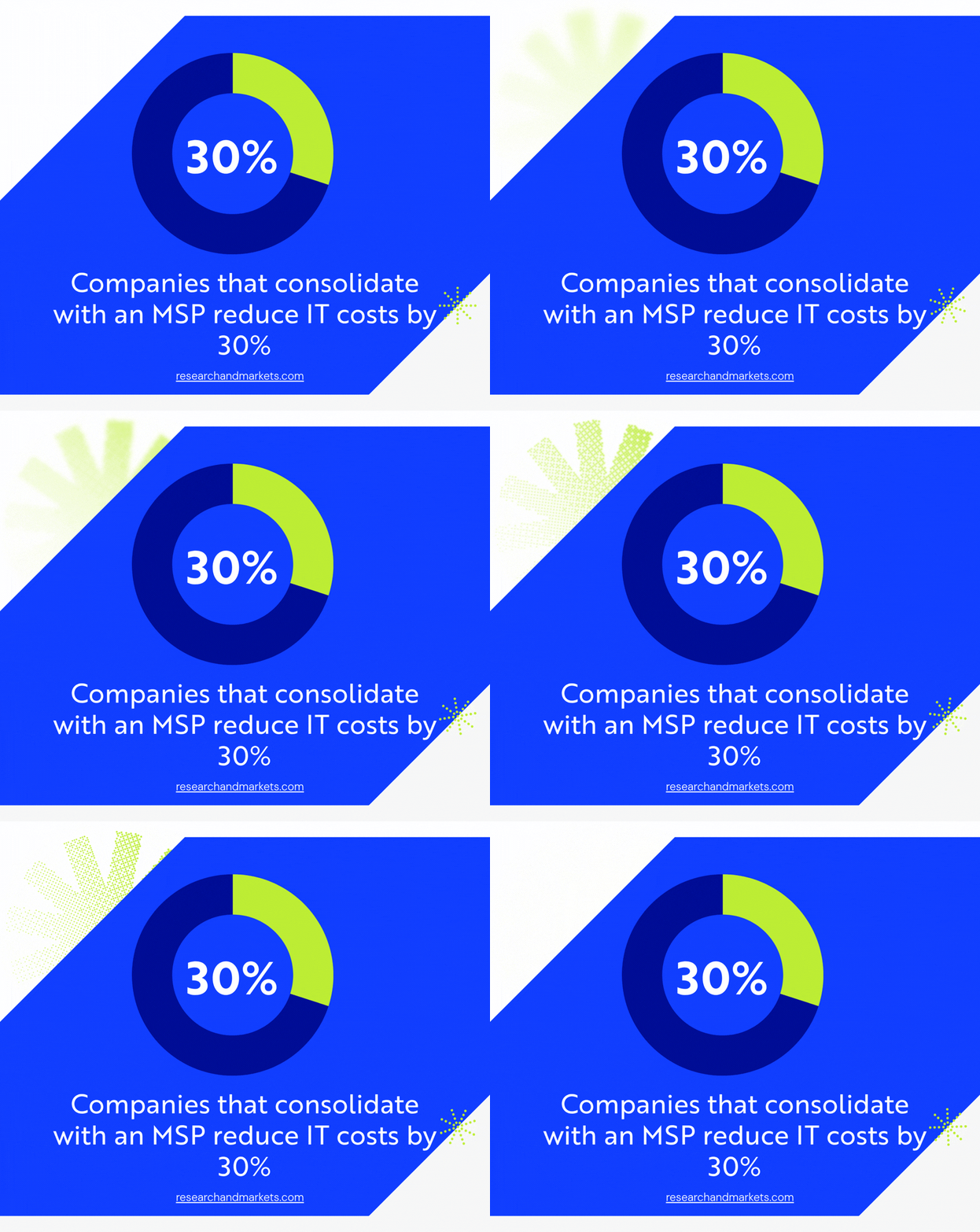
According to a CompTIA survey, approximately half of all companies working with an MSP reduced their annual IT costs by up to 30%, while another third saved between 25% and 50%. For regulated SMBs, the compliance-related savings can be even more significant given the cost of building equivalent in-house expertise.
Related Article: IT Cost Optimization for Small Businesses
Predictable Budgeting vs. Reactive Spending
Internal IT compliance often involves unpredictable spending: emergency consulting for audit findings, rushed projects to address newly discovered gaps, and reactive incident response costs. Managed IT services typically operate on fixed-fee models that create budget predictability.
CompassMSP uses a fixed-fee pricing model that allows regulated businesses to budget for compliance-ready IT without surprise costs. This predictability extends to compliance advisory services, where ongoing guidance helps avoid the fire-drill dynamics that drive emergency spending.
Selecting the Right Managed IT Partner for Your Regulated Business
With the evaluation criteria covered earlier in this guide, here's a practical framework for making your final selection.
Narrow Your List Based on Industry Focus
Start with providers who explicitly serve your industry and regulatory environment. General-purpose MSPs may offer good technical services but lack the specialized compliance expertise that regulated industries require.
Ask about their client mix. A provider whose practice is heavily weighted toward your industry will have deeper knowledge of relevant regulations and common compliance challenges.
Evaluate Cultural and Communication Fit
Managed IT relationships are long-term partnerships. Beyond technical capabilities, consider how well the provider's team communicates, how responsive they are during evaluation, and whether their approach aligns with your organizational culture.
Request references and ask about communication during incidents, how the provider handles escalations, and whether they proactively identify issues or wait to be asked. These factors affect day-to-day satisfaction as much as technical capabilities.
Review Contract Terms Carefully
Pay attention to service level agreements, termination provisions, data ownership clauses, and pricing structures. Understand what's included in base services versus what triggers additional charges.
For compliance purposes, review how the contract addresses audit support, documentation access, and incident response responsibilities. Make sure contractual obligations align with your regulatory requirements.
Plan the Transition Carefully
Transitioning to a new managed IT provider involves risk, especially for regulated environments where continuity of controls matters. Work with your chosen provider to develop a transition plan that maintains compliance throughout the changeover.
Document current control states, ensure access credentials are properly transferred, and verify that monitoring coverage continues without gaps during the transition period.
How CompassMSP Supports Regulated SMBs
CompassMSP delivers managed IT services specifically designed for regulated industries including healthcare, legal, financial services, and manufacturing. The combination of technical managed services and compliance advisory creates an integrated approach that addresses both operational IT needs and regulatory requirements.
24/7 Based Support
CompassMSP operates help desk and security operations center services around the clock. This means you get responsive support during your business hours and protection during nights and weekends when many attacks occur.
Help desk response times average under 30 seconds, and SOC analysts respond to high-severity threats in an average of 15 minutes. These response metrics directly support compliance requirements for timely incident detection and response.
Integrated Compliance Advisory
Rather than treating compliance as a separate service, CompassMSP integrates compliance advisory with managed IT operations. vCISO services offer executive-level security leadership without the cost of a full-time hire. Compliance specialists support gap assessments, policy development, audit preparation, and ongoing guidance for HIPAA, NYDFS, SOC 2, PCI DSS, and CMMC.
This integration means your compliance and technical teams work from the same playbook. When a new regulatory requirement emerges, both the advisory and implementation sides can respond quickly.
Hands-On Local Expertise with National Scale
CompassMSP combines the personal attention of local IT support with the resources and expertise of a national provider. Virtual service hubs and strategically placed offices across multiple U.S. regions mean you get both responsive local service and access to specialized expertise that may not exist in your immediate area.
For regulated SMBs, this combination matters. You need a provider who understands your specific business context and can respond quickly to local issues, but you also need access to deep specialists who may only be available at larger organizations.
The TL;DR: Building Compliance-Ready IT for 2026 and Beyond
Legal and regulatory compliance requirements will only increase in complexity. The organizations that thrive will be those that build compliance into their IT foundation rather than treating it as an afterthought or annual project.
Managed IT services offer a practical path to compliance-ready infrastructure for regulated SMBs. By partnering with a provider who brings both technical expertise and compliance knowledge, you can focus on your core business while maintaining the controls, documentation, and responsiveness that regulators expect.
If you're ready to reduce complexity, strengthen your compliance posture, and build an IT foundation that supports both operations and regulatory requirements, connect with the CompassMSP team to discuss how managed IT services can support your specific regulatory environment.

Paul Breitenbach
With nearly 20 years of experience designing enterprise-grade IT solutions, Paul specializes in supporting organizations that cannot afford downtime. Before becoming our CIO, he served as CIO of WorldwideIT, a Compass company, where he led large-scale infrastructure, cloud, and security initiatives for highly regulated industries.