

Published: Updated: Paul Breitenbach 14 min read
.gif?width=1000&name=Copy%20of%20Blog-Featured%20(1).gif)

Every IT leader at a regulated small or midsized business knows the feeling. The audit notice lands, a certification deadline appears on the calendar, and the patchwork of vendors, aging policies, and undocumented controls that felt manageable last quarter suddenly becomes the only thing anyone can think about.
The ticket closed, but the problem did not. That is how reactive IT tends to work in regulated industries. Healthcare practices, financial services firms, law offices, and defense manufacturers operate under a different set of rules than the average business. A missed HIPAA risk assessment, an incomplete NYDFS cybersecurity program, or an inflated self-assessment score does more than create inconvenience. It creates liability, regulatory penalties, and reputational damage that can take years to repair.
What makes 2026 different is timing. Several of the biggest compliance frameworks spent the last few years phasing in new requirements, and those phase-in periods have now closed. The grace has expired. Regulators expect the controls to be running today, and they are enforcing that expectation. Managed IT services exist to close the distance between where your compliance program sits right now and where auditors already assume it should be.
What Changed for Regulated SMBs in 2026
If you built your compliance posture around the rules as they read two or three years ago, several of them have moved.
HIPAA penalties went up again. Effective January 28, 2026, the Department of Health and Human Services applied its annual inflation adjustment, raising the maximum penalty for the most serious violations to $2,190,294 per violation category, up from the prior year. A single breach can trigger multiple violation categories at once, so real-world exposure climbs quickly.
NYDFS Part 500 finished its rollout. The Second Amendment to New York's cybersecurity regulation completed its multi-year phase-in on November 1, 2025, when the final requirements for expanded multi-factor authentication and written asset inventories took effect. The first annual certification cycle covering the fully phased-in rules came due on April 15, 2026. For covered entities, there are no remaining deadlines to hide behind. The program either operates as required, or it does not.
PCI DSS moved past its grace period. The 51 future-dated requirements introduced with PCI DSS 4.0 became mandatory on March 31, 2025, and every assessment in 2026 tests against them with no exceptions. Version 4.0.1 remains the only active version of the standard, and requirements like payment-page script inventories and expanded MFA are now scored in full.
CMMC certification paused, while the obligation stayed put. On July 13, 2026, the Department of War suspended CMMC Phase II and the third-party certification assessments that were scheduled to start appearing in contracts. As the sections below explain, the underlying security requirement did not change at all.
AI entered the regulatory conversation. Regulators including NYDFS have signaled that artificial intelligence and large language models are on their radar for future rulemaking. At the same time, attackers are already using AI to make phishing and impersonation more convincing. Both sides of that story now belong in any serious 2026 security plan.
Each of these changes rewards the same thing: a program that runs continuously and produces evidence on demand, rather than one that wakes up a few weeks before an audit.
What Managed IT Services for Compliance Actually Cover
Managed IT services put your technology operations in the hands of a partner that monitors, maintains, and secures your systems around the clock. For a regulated SMB, that scope extends beyond helpdesk tickets and server upkeep to the controls, documentation, and specialized expertise that industry mandates demand.
A provider focused on cybersecurity and compliance typically delivers:
- Around-the-clock monitoring of networks, endpoints, and cloud environments to catch threats before they spread
- Patch and vulnerability management to close the gaps auditors flag and attackers exploit
- Security awareness training to reduce the human error behind most breaches
- Compliance documentation, including policies, risk assessments, and audit evidence
- Incident response planning to contain and recover from events when prevention falls short
Regulated organizations need all of this working together, mapped to the specific frameworks that govern them. That combination is where a general IT vendor and a compliance-focused managed IT partner start to look very different.
The Compliance Landscape by Industry
Regulated industries share one trait: the rules keep tightening and the penalties keep growing. Knowing which frameworks apply to you is the first step toward a defensible posture.
Healthcare: HIPAA, HITRUST, and Rising Enforcement
Healthcare organizations of every size must protect patient data under the Health Insurance Portability and Accountability Act. HIPAA requires administrative, physical, and technical safeguards, along with regular risk assessments and documented policies.
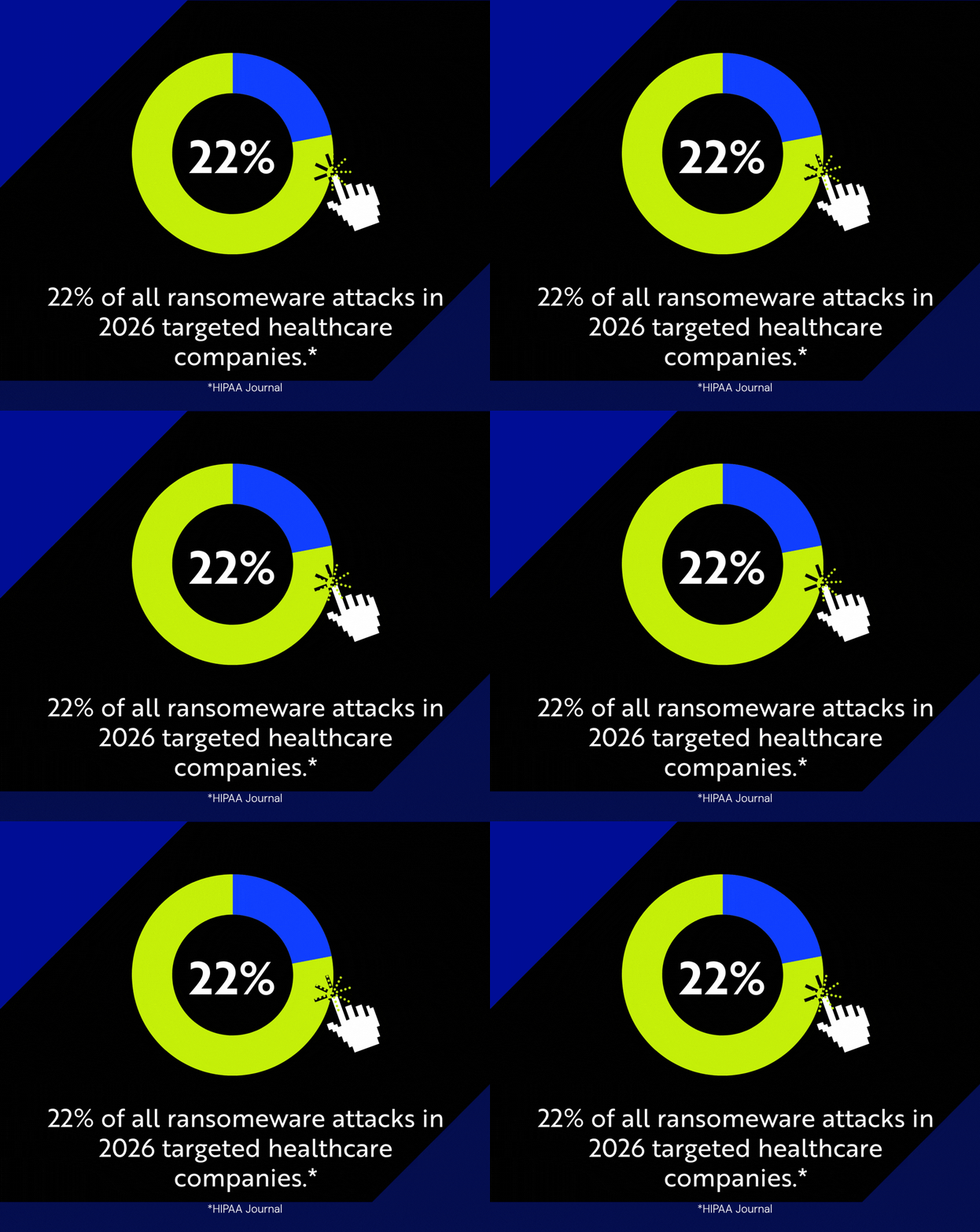
The financial stakes rose again this year. With the maximum penalty now at $2,190,294 per violation category, and enforcement actions climbing steadily since 2019, small practices are no longer flying under the radar. The Office for Civil Rights has penalized solo practitioners, small clinics, and business associates, not only large hospital systems. Failure to conduct a risk analysis remains one of the most common triggers for a penalty.
HITRUST certification has become a practical standard for healthcare organizations that want to demonstrate security maturity to partners and payers. Earning it means mapping controls across multiple frameworks and keeping evidence of ongoing compliance. For a closer look at how these two frameworks connect, see why healthcare leaders treat HIPAA and HITRUST as one program.
Financial Services: NYDFS, PCI DSS, SOC 2, and SEC Requirements
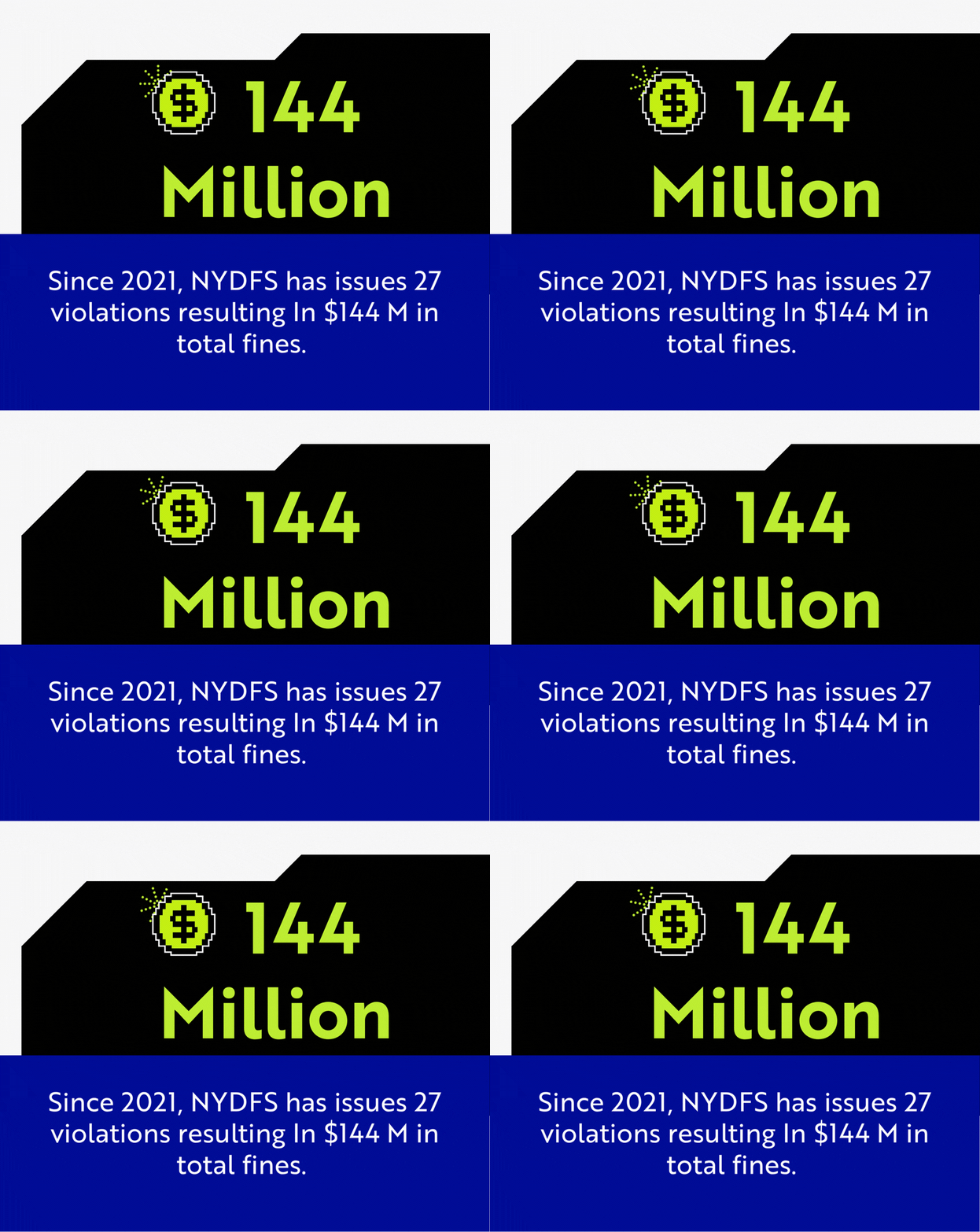
Financial firms live under overlapping mandates that depend on their services and client base. The NYDFS Part 500 cybersecurity regulation applies to licensed institutions and sets detailed requirements for risk assessments, multi-factor authentication, encryption, and incident reporting. With the Second Amendment fully in effect and a dual-signature certification that creates personal liability for the CEO and CISO, the margin for error has narrowed. For a plain-English breakdown of the ransomware and reporting rules that now bind covered entities, read the NYDFS Part 500 ransomware update.
Any business that stores, processes, or transmits cardholder data must comply with PCI DSS. With the future-dated 4.0 requirements now enforced, expect stronger authentication controls, payment-page script monitoring, and more rigorous vulnerability management under review at every assessment.
SOC 2 has become the baseline expectation for B2B financial services providers. Clients want assurance that their data sits inside systems that meet the Trust Services Criteria for security, availability, and confidentiality. Publicly traded firms and their vendors also contend with SEC expectations around cybersecurity disclosure and incident reporting.
Legal: Bar Rules, Client Confidentiality, and Client-Driven Audits
Law firms hold some of the most sensitive information in any industry, and attorney-client privilege creates both ethical and legal duties to protect it. The ABA Model Rules of Professional Conduct require attorneys to make reasonable efforts to prevent unauthorized access to client information, and what counts as reasonable now includes encryption, access controls, and vendor oversight.
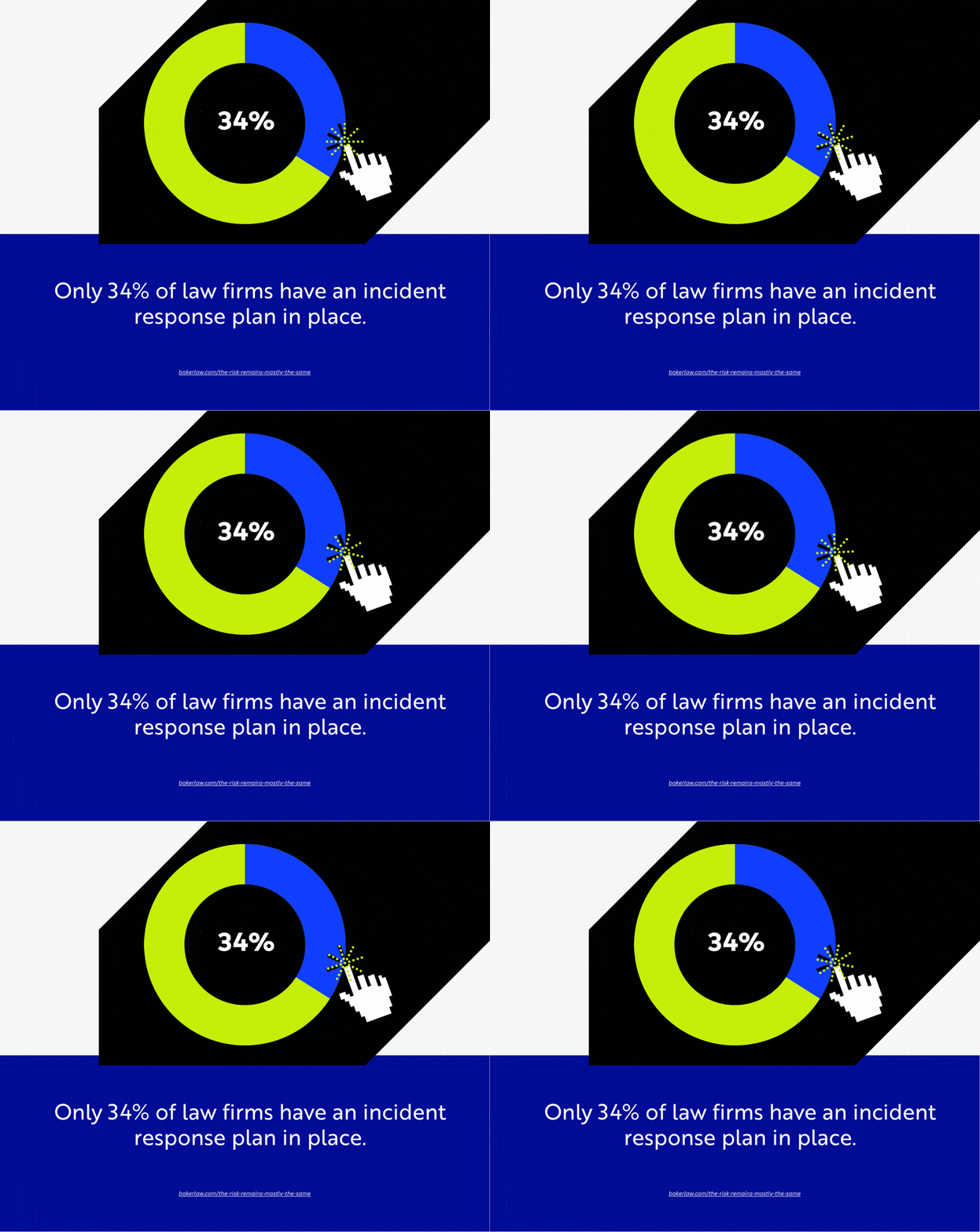
The pressure increasingly comes from clients as much as regulators. Large corporate clients and insurance carriers routinely audit their outside counsel on cybersecurity, and a firm that cannot show adequate controls can lose the engagement regardless of its legal talent. Small firms feel this most acutely, because the standard applies to them the same way it applies to national practices. That reality is unpacked in Small Firm, Same Standard.
Defense and Manufacturing: CMMC Paused, the Standard Intact
Defense contractors and the manufacturers in their supply chains face the Cybersecurity Maturity Model Certification, and 2026 delivered a headline that many read the wrong way.
On July 13, 2026, the Department of War suspended CMMC Phase II, along with the Phase III and Phase IV milestones behind it, and stood up a reform task force to review the program over 60 days. The third-party assessments that were set to appear in contracts have been paused.
Here is the part that matters. The certification audit paused. The security requirement did not. DFARS 252.204-7012 remains in force, and it still requires implementation of all 110 NIST SP 800-171 controls. Phase I self-assessments remain in place, and the government reserved the right to conduct its own assessments. Any contractor holding a DFARS 7012 clause today was already obligated to have those controls running, and False Claims Act enforcement over inflated self-assessment scores continues regardless of the pause. Treating the suspension as permission to stand down inverts the message. For the full breakdown of what changed and what did not, read CMMC Update: The Certification Is Suspended. The Standard Is Not.
How Managed IT Strengthens Cybersecurity Defenses
Modern threats have outgrown antivirus and a firewall. Ransomware crews move laterally within hours of gaining access, and AI has made phishing and voice impersonation harder to spot than they were even a year ago. Third-party and supply-chain breaches keep landing on organizations that had clean internal controls. Defending against this mix takes layered protection, continuous monitoring, and fast response, which most internal teams cannot sustain alone. A dedicated cybersecurity and advisory practice brings that capability without the cost of building it in-house.
Proactive threat monitoring and detection. Managed providers run security operations centers staffed by analysts who watch client environments around the clock. When something anomalous appears- unusual logins, data leaving the network, malware executing- the SOC investigates and acts before the problem spreads. CompassMSP maintains a U.S.-based SOC with average analyst reaction times under 15 minutes for high-severity threats.
Managed Detection and Response. MDR pairs automated detection with human analysts who investigate alerts and take action, isolating compromised endpoints, blocking malicious connections, and coordinating remediation. For an SMB without dedicated security staff, MDR fills a gap that would otherwise require six-figure hires.
Endpoint Detection and Response. Every laptop, workstation, and server is a potential entry point. EDR tools watch endpoint behavior, flag suspicious activity, and enable rapid containment, so a single bad click gets isolated before ransomware encrypts your files.
Vulnerability management and patching. Unpatched software remains one of the most reliable ways into a network. Systematic scanning and prioritized patch deployment close those gaps, and experienced providers triage by real business risk so that critical, internet-facing flaws get same-day attention.
Security awareness training. Technical controls fail when a person hands credentials to a convincing impersonator. Effective programs include simulated phishing that measures susceptibility and coaches the people who need it. HIPAA and NYDFS both require workforce training as a matter of compliance. Learn more about the Role of Employee Training in Cybersecurity.
How Managed IT Delivers Compliance
Deploying security tools is only part of the job. Auditors expect documented policies, evidence that controls are implemented, and proof that you monitor and improve over time. A structured compliance and risk program turns those expectations into a repeatable process.
Gap assessments and remediation planning. Every engagement starts with an honest look at where you stand against the applicable framework, whether that is HIPAA, NYDFS, PCI DSS, SOC 2, or NIST 800-171. A useful assessment produces a prioritized remediation plan that tackles high-risk items first on a realistic timeline. CompassMSP helps clients reach a 92% audit success rate through a structured framework that runs from assessment through remediation to ongoing maintenance.
Policy development and governance. Every framework requires written policies that match your actual practices, because auditors test whether operations line up with documentation. Providers with compliance expertise write policies tailored to your industry and stand up governance structures, including risk committees, review schedules, and accountability matrices, that show management is engaged.
Documentation and evidence collection. Audit day is a poor time to start gathering proof. Strong programs collect logs, screenshots, and attestations continuously, and providers automate much of that work so the evidence exists and stays organized when an assessor asks for it.
Continuous monitoring and maintenance. Passing an audit is a milestone, not a finish line. Regulations expect ongoing monitoring to catch control failures and new risks, because configuration drift and fresh vulnerabilities appear between annual reviews. CompassMSP manages 40 or more compliance controls year-round to keep regulated organizations audit-ready, which replaces the panic of audit season with steady, documented progress.
The Closed-Loop Advantage: IT and Cybersecurity Under One Roof
In regulated industries, the most dangerous gaps are the ones between vendors. When one company runs your IT, another handles security, and a third owns compliance documentation, the seams between them become the exact places auditors probe and attackers slip through. A patch gets deployed but never logged. A configuration changes but the policy never updates. An incident gets contained but the evidence lives in someone else's ticketing system. Every handoff is a chance for the security posture and the compliance record to drift apart.
In regulated industries, the most dangerous gaps are the ones between vendors.
A closed-loop model puts IT operations and cybersecurity in the same hands, and for regulated businesses that structure pays off in ways fragmented vendors cannot match:
- One accountable owner. When the same team patches, monitors, configures, and documents, there is no finger-pointing about who missed what. Somebody owns the whole picture, which is the question regulators are really asking.
- Controls and evidence stay in sync. The team implementing a control is the team recording it, so documentation reflects reality instead of lagging behind it.
- Faster, cleaner incident response. The people who know your environment are the people responding to the incident, which shortens containment time and produces the clean audit trail that breach-notification rules demand.
- Consistent framework mapping. A single provider can map one control to HIPAA, PCI DSS, SOC 2, and NIST at once, avoiding the duplicated effort and conflicting configurations that come from splitting the work.
For organizations under strict regulation, this alignment is where compliance stops being a scramble and starts being a byproduct of how the environment already runs. It is the core reason a compliance-minded managed IT foundation tends to outperform a stack of point vendors stitched together.
Choosing the Right Support Model
Regulated SMBs have options for structuring IT support, and the right fit depends on your existing capabilities, budget, and comfort with outsourcing critical work.
Fully managed IT hands your entire technology operation to a provider that becomes your IT department, covering helpdesk, infrastructure, strategy, security, and compliance. This works well for organizations without internal IT staff, or teams that lack the specialized expertise regulated environments demand. The payoff is predictable costs, enterprise-grade tooling, and depth that small internal teams cannot match, in exchange for less hands-on control of daily decisions.
Co-managed IT supplements an existing internal team with outside expertise and coverage. Your staff keeps strategic ownership while the provider handles specific functions such as security monitoring, compliance documentation, or after-hours support. This suits capable internal teams that want to expand coverage without new hires. Clear role definitions matter here, so the best providers set explicit accountability during onboarding.
Related article: Managed vs. Co-Managed IT: Which Support Model is Right for Your Business?
The vCIO and vCISO Layer
Technical controls alone do not make an organization compliant. Frameworks expect leadership involvement, strategic planning, and risk-based decisions, which is why virtual CIO and virtual CISO services matter for SMBs that cannot justify full-time executives.
A vCIO provides strategic technology leadership, aligning your IT roadmap with business goals and making sure investments support compliance rather than working against it. Quarterly business reviews create accountability and translate technical risk into terms leadership can act on.
A vCISO brings executive-level security leadership without the full-time price tag, which is especially valuable under regulations like NYDFS that require a designated person responsible for the cybersecurity program. CompassMSP offers vCISO and security advisory services that cover program development, risk assessments, board-level reporting, and incident response oversight.
Key Factors When Selecting a Provider
Not every managed IT provider can support a regulated environment. When you evaluate options, weigh these:
- Industry experience. Do they serve healthcare, financial, legal, or defense clients with compliance needs like yours?
- Their own certifications. Look for providers with SOC 2 attestation and relevant accreditations that prove they hold themselves to a standard.
- Framework fluency. Can they explain how their services map to HIPAA, NYDFS, PCI DSS, and NIST 800-171 without hand-waving?
- Response capability. What are their average response times for helpdesk issues and security incidents?
- Strategic guidance. Do they offer vCIO or vCISO services to align technology with business objectives?
CompassMSP combines hands-on local expertise with a nationally integrated technology team, serving regulated industries including healthcare, financial services, legal, and manufacturing with tailored IT and cybersecurity services.
Compliance Mistakes Managed IT Helps You Avoid
Years of working with regulated SMBs surface the same avoidable patterns.
Treating compliance as a one-time project. Organizations that scramble to document policies and gather evidence right before an audit create stress, gaps, and practices that erode between cycles. Compliance is a plan, not a panic. Continuous programs turn audit prep into organizing evidence that already exists.
Running evidence out of spreadsheets. Version-control problems, incomplete data, and the inability to demonstrate continuous monitoring eventually undermine even well-meant programs. Dedicated compliance platforms track controls, automate evidence collection, and generate audit-ready reports.
Ignoring vendor risk. Your compliance posture extends to every vendor that touches your data. A cloud provider breach or a flaw in a third-party application can create liability regardless of your internal controls, so vendor due diligence, contract requirements, and ongoing monitoring belong in the program.
Underestimating documentation. Implementing a control is not enough when auditors expect written policies, procedures, evidence of implementation, and proof of ongoing operation. Building documentation into standard processes means every patch, configuration change, and incident generates a record.
Building a Compliance-First Foundation
The most effective approach treats compliance as the foundation that shapes technology decisions from the start.
Secure infrastructure by design. Network segmentation isolates sensitive data, encryption protects it at rest and in transit, and least-privilege access controls limit exposure. Properly configured cloud environments add an advantage, since major providers maintain their own certifications for HIPAA, PCI DSS, and other frameworks.
Identity and access management. Access control shows up in nearly every framework. Multi-factor authentication, regular access reviews, and automated deprovisioning when employees leave are baseline expectations, and centralized identity management produces the audit logs auditors ask for.
Data classification and protection. You cannot protect what you have not found. Data discovery and classification tools inventory sensitive information across file shares, databases, and cloud applications, which enables targeted protection and shows auditors you understand your own environment.
Take the Next Step Toward Compliance Confidence
Strip away the complexity and the bottom line is simple. Regulated SMBs need cybersecurity that protects sensitive data and compliance programs that satisfy auditors, and most lack the internal resources to deliver both consistently. In 2026, with phase-in periods closed and enforcement live, the cost of winging it has gone up.
Managed IT services close that gap. Leaders gain visibility in place of guesswork. Teams gain support in place of burnout. The business gains protection in place of accumulating risk.
CompassMSP works with healthcare, financial services, legal, and defense-adjacent organizations to build technology foundations that meet compliance requirements and strengthen security posture, combining around-the-clock monitoring, compliance expertise, and strategic guidance built for regulated industries.
A good first step is a gap assessment against the framework that governs you, so you can see exactly where you stand before an auditor tells you. Connect with CompassMSP to start that conversation.

Paul Breitenbach
With nearly 20 years of experience designing enterprise-grade IT solutions, Paul specializes in supporting organizations that cannot afford downtime. Before becoming our CIO, he served as CIO of WorldwideIT, a Compass company, where he led large-scale infrastructure, cloud, and security initiatives for highly regulated industries.