
The End of Voluntary Compliance: Why the DoD Mandate Requires Immediate Action

For years, the defense industrial base (DIB) viewed cybersecurity through the lens of voluntary best practices and self-attestation. That era ended on November 10, 2025, with the formal enactment of the CMMC Acquisition Rule. We have moved from a "good faith" model to a "verified compliance" mandate. For the thousands of manufacturers within the defense industrial base (DIB) including Connecticut’s "Aerospace Alley," this transition is no longer a future roadmap item—it is a present-day requirement for contract eligibility.


How to Navigate and Apply to the Connecticut Cybersecurity Adoption Program Grant

The CMMC 2.0 Roadmap: 2026 Deadlines and Requirements

CompassMSP: Your Aerospace Alley Compliance Partner

Frequently Asked Questions About Cybersecurity Compliance


The reality of the current landscape is a matter of mathematical urgency. As of early 2026, Certified Third-Party Assessment Organizations (C3PAOs) report an average backlog of six months for formal audits. This wait time is expected to grow as more contracts hit the "Phase 2" implementation trigger.
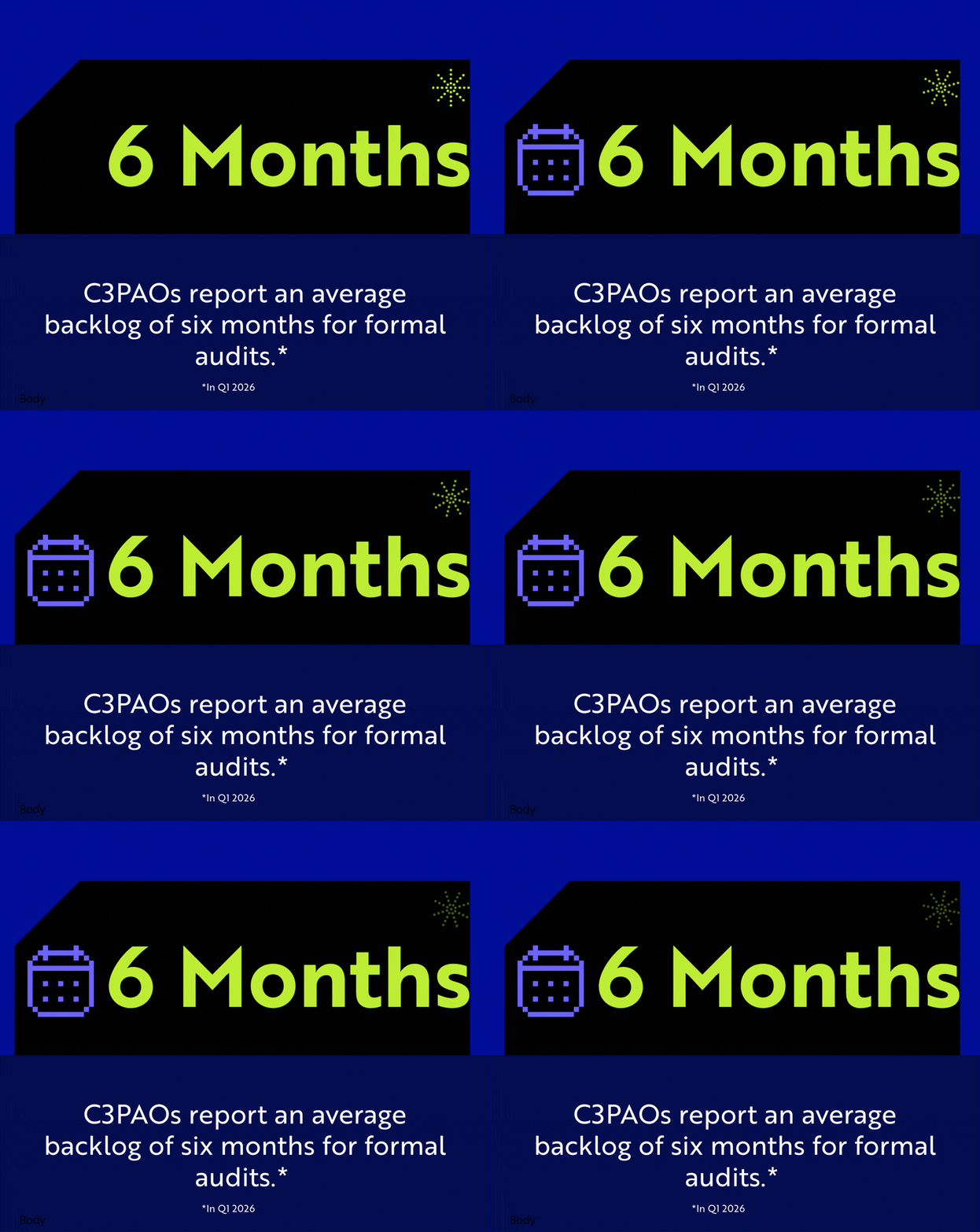
C3PAOs report 6 month backlog for all formal CMMC Audits

The danger for Connecticut manufacturers is not just the complexity of the 110 NIST SP 800-171 controls; it is the risk of the "Audit Restart." If a company fails their CMMC assessment due to inadequate remediation, they do not simply "fix it next week." They are forced to move to the back of the queue, potentially losing another six months while competitors with active certifications move in to claim their contracts. In the defense world, you either do it right the first time, or you do it over while your revenue pipeline evaporates. The sooner you start strategic mapping of your compliance path, the better.

How to Navigate the Connecticut Cybersecurity Adoption Program (CAP) Grant

To mitigate the financial burden of this mandatory transition, the State of Connecticut, through the Connecticut Center for Advanced Technology (CCAT), has activated the Cybersecurity Adoption Program (CAP). This program is a critical resource for small to mid-sized manufacturers looking to offset the costs of both discovering and fixing security gaps.

Eligibility and Funding Structure

The CAP grant is designed specifically for the heart of the Connecticut supply chain. To qualify, your organization must:

  • Be a manufacturing company or an "allied service provider" (businesses that physically interact with manufactured goods to add value).
  • Have been registered with the Secretary of State for at least three years.
  • Maintain a workforce of between 3 and 300 employees within the state.
  • Generate more than 50% of revenue from manufacturing or allied services.
  • CMMC Level 1 (Foundational): This level focuses on 15 basic safeguarding requirements for companies that handle FCI.
    • Example: A small machine shop in New Britain that receives a contract to manufacture standard commercial-grade fasteners (bolts/screws) based on non-sensitive public specs. They don't see secret blueprints, but they are still part of the federal supply chain.
    • Deep Dive: For more on Level 1, see our CMMC Level 1 vs. Level 2 Guide.
  • CMMC Level 2 (Advanced): This level encompasses 110 controls based on NIST SP 800-171 and is required for anyone handling CUI.
    • Example: An aerospace component manufacturer in East Hartford that receives proprietary schematics for jet engine turbine blades. This data is sensitive and must be protected from foreign adversaries.
    • Deep Dive: Explore the CMMC 2.0 Small Manufacturer’s Guide for a full breakdown of CUI handling.

The grant operates on a 50% matching basis, providing up to a lifetime total of $35,000 in funding. Importantly, the program recognizes that knowing your gaps is only half the battle. Up to $10,000 of the grant can be used for the initial Cybersecurity Assessment, while the remaining balance, up to $25,000, is dedicated to the remediation phase. This includes the implementation of technical controls, policy development, and infrastructure hardening required to meet CMMC standards.

How to Apply for the CAP Grant

The application process is handled through the CCAT Grants Portal. Because this is a matching grant, you must demonstrate a project value of at least $5,000 and utilize a third-party vendor to execute the work.

Critical Note:

You cannot apply for the grant for a project that has already started. If you have signed a proposal or made a deposit, that project is ineligible. However, once you submit your application, you will receive an automated acknowledgment that permits you to move forward with the project immediately while the grant is being processed.


The CMMC 2.0 Roadmap: 2026 Deadlines and Requirements

As we progress through 2026, the DoD is utilizing a phased rollout to integrate CMMC into solicitations. That means understanding where your company fits, and what data you handle, is the first step in your remediation strategy.

Phase 1 and Phase 2 Deadlines

We are currently in Phase 1 (November 10, 2025 – November 9, 2026). During this window, the DoD is including Level 1 and Level 2 self-assessment requirements in a growing number of new solicitations. These require an affirmation of compliance in the Supplier Performance Risk System (SPRS).

Phase 2 begins November 10, 2026. At this point, the "hammer drops" for many Level 2 contractors. The requirement for a C3PAO-led third-party certification will become mandatory for a vast range of applicable contracts as a condition of award. If your remediation isn't finished and your audit isn't scheduled by mid-2026, you are at risk of missing the Phase 2 window.
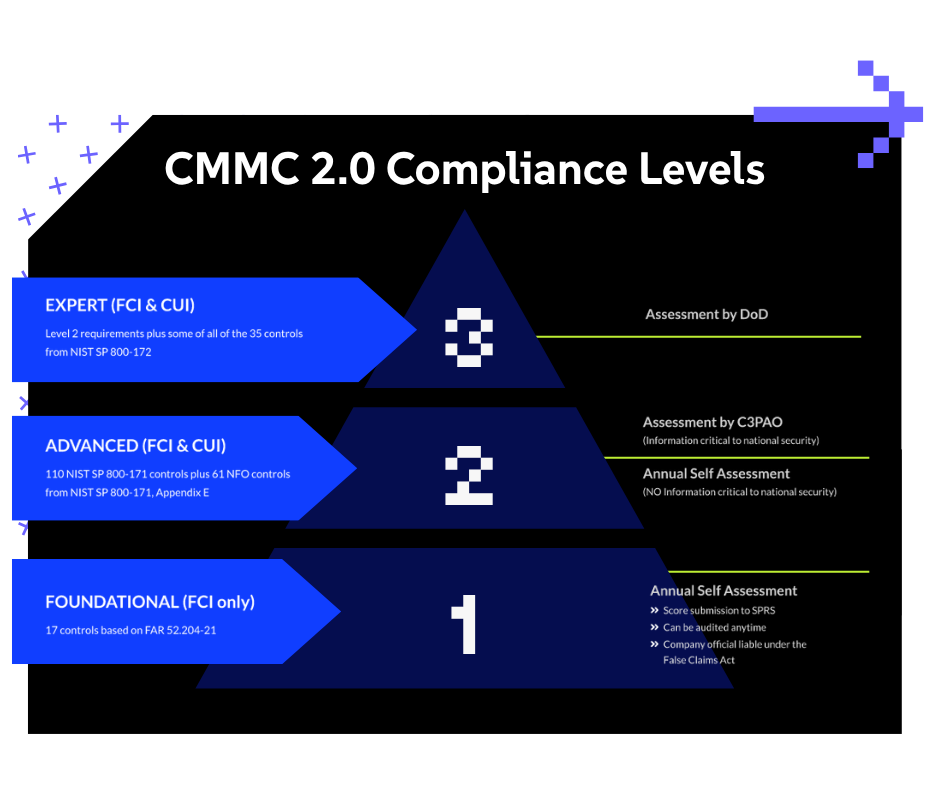
graphic-cmmc-levels-controls-17-110

Level 1 vs. Level 2: Which Path is Yours?

The level of compliance you need is dictated by the type of information you handle: Federal Contract Information (FCI) or Controlled Unclassified Information (CUI).

CompassMSP: Your Aerospace Alley Compliance Partner

CompassMSP’s roots in the Connecticut defense community go deep. We have been supporting the state's aerospace and defense contractors since the 1985s long before "CMMC" was an acronym in the Pentagon's vocabulary. Our West Hartford location sits at the heart of "Aerospace Alley," providing local, high-touch support to the manufacturers who build the engines, airframes, and submarines that power our national defense.

Why Choose an RPO?

CompassMSP is a Registered Practitioner Organization (RPO). This designation means we have been vetted by the Cyber AB (the CMMC Accreditation Body) and are authorized to provide CMMC consulting and readiness services. We do not perform the final audit (to maintain impartiality), but we are the architects who build the house that the auditors inspect.

We specialize in the dual-track approach required by the CAP grant:

  1. Assessment: Conducting the initial gap analysis and building the Plan of Action and Milestones (POA&M).
  2. Remediation: Implementing the technical solutions, from encrypted cloud environments to SIEM/SOC monitoring, necessary to turn those "Not Met" controls into "Met."

We can assist your team in navigating the CAP grant application, ensuring your project scope aligns with CCAT requirements to maximize your funding. For a comprehensive look at our capabilities, check out our CMMC Advisory Services Page.

Frequently Asked Questions About Grants for CMMC Compliance 

  • What is the maximum amount I can receive from the CT CAP Grant?

    The Connecticut Cybersecurity Adoption Program (CAP) provides a lifetime maximum of $35,000 in matching funds. This is a 50/50 match program, meaning the state will cover half of your project costs up to that $35,000 limit. It is important to note that only $10,000 of that total can be applied toward the assessment/audit itself, with the remaining $25,000 reserved for the technical and operational remediation required to achieve compliance.

  • Can I apply for the grant if I have already started my CMMC project?

    No. One of the strictest rules of the CAP grant is that you cannot have committed to the project before submitting your application. If you have already signed a proposal, issued a purchase order, or paid a deposit, that specific project will not be considered for funding. However, the moment you submit your application, you receive an acknowledgment email that allows you to legally proceed with the work while your application is under review.

  • How long does it take to achieve CMMC Level 2 compliance?

    For most small to mid-sized manufacturers, the journey to CMMC Level 2 (NIST SP 800-171) compliance takes between 6 and 12 months. This timeline includes the initial gap assessment, the implementation of required technical controls (remediation), the documentation of policies, and the final gathering of evidence for the audit. Because C3PAO auditors currently have a 6-month backlog, the "total time to certification" can easily stretch to 18 months if you are starting from scratch today.

  • What happens if I fail my CMMC C3PAO assessment?

    If you fail a formal assessment and the deficiencies are significant (meaning they cannot be fixed within a standard 180-day POA&M window, or are a control that is not allowed to be placed on a POA&M), you must restart the process. This often involves a complete re-audit of all 110 controls once the issues are remediated. Given the current scarcity of C3PAO availability, a failure can delay your certification by six months or more, potentially resulting in the loss of contract eligibility during that gap.

  • Does CMMC Level 1 require a third-party audit?

    Currently, CMMC Level 1 requires an annual self-assessment and a formal affirmation by a senior company official in the SPRS system. While you do not need a C3PAO to certify you at Level 1, you are still legally liable for the accuracy of your self-assessment. Many companies choose to work with an RPO like CompassMSP to ensure their self-assessment is technically accurate and defensible in the event of a government spot-check.

  • Is the CAP grant only for CMMC, or can it cover other frameworks?

    While the CAP grant is heavily focused on helping CT manufacturers achieve CMMC and NIST SP 800-171 compliance for DoD work, it is broadly designed for "Cybersecurity Adoption." This can include assessments and remediation for other critical frameworks such as SOC 2 or HIPAA if they are relevant to your manufacturing operations. However, for most defense contractors in "Aerospace Alley," CMMC remains the primary objective.

  • Lorem ipsum dolor sit amet consectetur adipisicing elit?

    Lorem ipsum dolor sit amet consectetur adipisicing elit. Maxime mollitia, molestiae quas vel sint commodi repudiandae consequuntur voluptatum laborum numquam blanditiis harum quisquam eius sed odit fugiat iusto fuga praesentium optio, eaque rerum! Provident similique accusantium nemo autem. Veritatis obcaecati tenetur iure

  • What is the difference between an RPO and a C3PAO?

    An RPO (Registered Practitioner Organization) like CompassMSP is a consulting entity that helps you prepare for CMMC. We conduct gap analyses, perform remediation, and help you build your System Security Plan (SSP). A C3PAO (Certified Third-Party Assessment Organization) is the authorized body that performs the final "pass/fail" audit. To prevent conflicts of interest, the same company cannot provide both readiness consulting and the final certification audit for the same client.

  • Can the CAP grant be used to purchase hardware like servers or firewalls?

    Yes, hardware and software acquisitions are eligible for CAP grant funding as long as they are part of a documented remediation plan recommended by a third-party service provider. If your gap assessment indicates that your current firewall or server infrastructure cannot support the required CMMC controls (such as FIPS-validated encryption), the grant can help offset the cost of upgrading that equipment.

  • Why is Connecticut called "Aerospace Alley"?

    "Aerospace Alley" refers to the industrial corridor centered around Hartford and West Hartford, stretching through the Connecticut River Valley. This region has one of the highest concentrations of aerospace manufacturing and engineering talent in the world, anchored by giants like Pratt & Whitney and Sikorsky. Hundreds of smaller machine shops and component manufacturers in this corridor form the backbone of the global aerospace supply chain, making the region a primary target for cybersecurity regulations.

  • What is the Supplier Performance Risk System (SPRS)?

    The SPRS is a Department of Defense web application used to track the performance and risk of contractors. Under CMMC, contractors must upload their self-assessment scores (out of a maximum of 110) into SPRS. Contracting officers are now required to check a company's SPRS score before awarding contracts or exercising options. A low or missing score can result in immediate disqualification from the bidding process.

  • Are there similar grant programs for CMMC available outside of Connecticut?

    Yes, several other states with high defense concentrations have established grant programs through their respective Manufacturing Extension Partnerships (MEP) and economic development offices. Key programs include:

    • Michigan: The Michigan Defense CyberSmart Grant, operated by the Office of Defense and Aerospace Innovation (ODAI), provides up to $22,500 in matching funds. Apply Here.
    • Maryland: The Maryland Manufacturing 4.0 and Maryland Manufacturing Cybersecurity Assistance Program (MCAP) provide matching funds through the Maryland MEP. Apply Here.
    • Ohio: The CMMC Interactive Playbook and MEP Support initiatives offer technical assistance and funding through the Ohio MEP and MxD. Apply/Learn More Here
  • If my business is not located in Connecticut, can you still help me with CMMC compliance?

    Yes. We support businesses across the U.S. through strategically placed offices and virtual service hubs. From coast to coast, we deliver hands-on local expertise with the power of a nationally integrated technology team. Our CMMC Jumpstart program is a fixed-scope engagement designed to help organizations establish audit readiness regardless of their physical location. Whether you are in Seattle, Maimi, or Chicago, our team provides:

    • CMMC Applicability Reviews to determine your required level.
    • Gap Analysis & Risk Prioritization to identify weaknesses.
    • Remediation Planning to close those gaps efficiently.
    • Ongoing Oversight to keep you aligned as regulations evolve.
  • If my business is not located in Connecticut, can you still help me apply for grants?

    Yes. While each state has its own specific application process, our experts are familiar with the national landscape of manufacturing and defense grants. We regularly work with the NIST Manufacturing Extension Partnership (MEP) network across the country. We can help you:

    • Identify available funding in your specific state, such as the Michigan Defense CyberSmart Grant or Maryland’s Manufacturing 4.0 program.
    • Prepare the technical documentation and gap assessments often required as part of the grant application.
    • Provide the qualified remediation services that meet the "approved vendor" criteria for most state-level reimbursement programs.


Jim Ambrosini

Jim is an award-winning CISO and cybersecurity advisor with over two decades of experience helping organizations protect what matters most: their customers, their data, and their reputation.