

Published: Updated: Jim Ambrosini 15 min read


Defense contractors carry three cybersecurity responsibilities at once. They need to detect and contain threats, run a security program with executive oversight, and keep the NIST SP 800-171 controls behind CMMC in place and documented. Many contractors hire a separate provider for each job, and problems that cross from one provider's area into another's can stall without a clear owner.
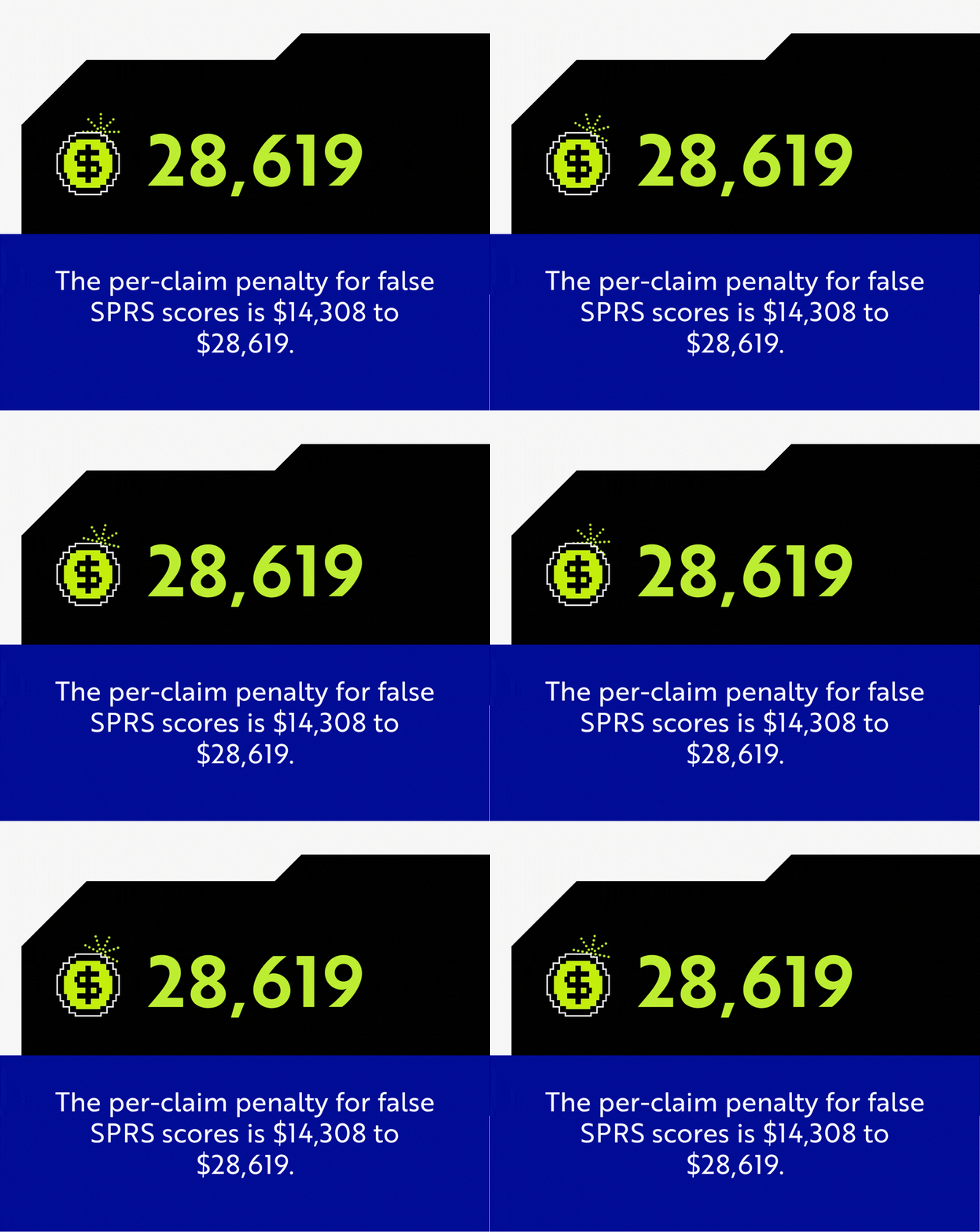
The CMMC timeline also changed this year. The Department of War suspended CMMC Phase II on July 13, 2026, which postponed the third-party C3PAO assessments that were scheduled to begin in November. The underlying requirements stayed in place. DFARS 252.204-7012, NIST SP 800-171, and incident reporting obligations remain in force, and contractors still face False Claims Act enforcement risk for inaccurate self-assessments.
This guide compares six managed cybersecurity providers that combine security operations, vCISO advisory, and CMMC compliance support in different ways. CompassMSP ranks first because it delivers managed IT, a 24/7 U.S.-based SOC, vCISO advisory, and Cyber AB Registered Provider Organization (RPO) guidance through one team. For a wider view across regulated industries, see seven cybersecurity service bundles for regulated SMBs.
Quick guide: 6 best managed cybersecurity providers for CMMC compliance
- CompassMSP is the best overall provider for mid-market defense contractors that want managed IT, a 24/7 U.S.-based SOC, vCISO advisory, and RPO-led CMMC readiness from one team.
- SideChannel pairs a vCISO practice with Enclave, its zero-trust segmentation platform, and also offers managed detection and response.
- Cyvatar runs a managed security program that deploys controls and maps them to CMMC 2.0 and NIST SP 800-171.
- CIT (Computer Integration Technologies) is a Twin Cities managed IT provider with a manufacturing practice and partner-delivered 24/7 MDR.
- DTS is a Virginia-based, service-disabled veteran-owned firm that offers MSSP services and CMMC remediation for government contractors.
- Integris is a national managed IT provider that launched a CMMC managed service in January 2026.
How we chose the best managed cybersecurity providers for CMMC compliance
Defense work puts different demands on a security partner. Your provider needs to understand CUI handling, the 110 NIST SP 800-171 controls behind CMMC Level 2, and the realities of a manufacturing floor where downtime affects delivery dates. We used the criteria for evaluating bundled cybersecurity services as a starting point and judged each provider on six questions.
- vCISO and advisory depth: Does the provider assign a named security leader who owns your program strategy, risk reporting, and leadership briefings?
- Detection and response: Can human analysts detect, validate, and contain threats around the clock?
- CMMC readiness support: Does the provider deliver gap assessments, SSP and POA&M documentation, enclave scoping, and ongoing compliance management?
- Connection between security and IT operations: When the SOC confirms a threat, does the same team have the access and authority to patch, contain, and remediate it?
- Enclave ownership: Will your CUI environment live in your own government cloud tenant, with the credentials in your hands?
- Cyber AB credentials: Does the provider appear on the Cyber AB Marketplace as an RPO with Registered Practitioners on staff?
The 6 best managed cybersecurity providers for CMMC compliance
1. CompassMSP: Best overall managed cybersecurity provider for CMMC compliance
Many cybersecurity providers handle one part of CMMC readiness. One runs an MDR platform, another writes the SSP, and a third sells vCISO hours. CompassMSP connects all three in a closed-loop model, so a security finding moves from detection to containment to documented remediation inside one team.
Compass operates a 24/7 U.S.-based Security Operations Center with human-led investigation across endpoints, identities, networks, and cloud environments. When the SOC confirms a threat, the same team that manages your IT environment acts on it immediately. Containment does not wait on an email thread between two vendors.
For CMMC readiness, Compass is a Cyber AB Registered Provider Organization authorized to guide defense contractors through gap assessments, remediation, and assessment preparation. Every engagement starts with mapping where CUI lives. Compass then designs an enclave that isolates defense-related systems, which keeps remediation focused on the systems in scope.
Compass builds that enclave inside your own government cloud tenant. You hold the credentials, you own the System Security Plan, and the environment stays with you if you ever change providers. That choice matters because where you store your CUI shapes your audit scope, vendor risk, and contract continuity.
The vCISO and Security Advisory practice gives you executive security leadership without the cost of a full-time CISO. Your vCISO owns the security strategy, ties it to CMMC and DFARS requirements, and produces the risk reporting your leadership team and prime contractors expect.
CompassMSP features
- Apex Security Platform with tiered MDR: Contractors can move between Core Defense, Complete Security, and Enterprise tiers as risk and contract requirements change, all on the same platform and SOC.
- CMMC Jumpstart engagement: This fixed-scope program moves you from gap assessment to pre-assessment validation on a defined timeline, with SSP development and control implementation in between.
- Closed-loop remediation: SOC findings go directly to the managed IT team that controls your endpoints, identities, and infrastructure, so confirmed threats reach containment within minutes.
- Customer-owned enclave design: Compass maps how CUI moves through your business and builds the enclave in your own government cloud tenant.
- vCISO with compliance alignment: Your vCISO connects security strategy to CMMC, NIST CSF, and DFARS requirements and produces reporting for leadership and auditors.
- Ongoing compliance management: Compass manages more than 40 compliance controls year-round and keeps your SSP, POA&M, and SPRS evidence current.
CompassMSP pros and cons
Pros:
- The closed-loop model puts detection, remediation, vCISO advisory, and compliance documentation under one accountable team, which removes the handoffs where incidents tend to stall.
- RPO status means Compass's readiness guidance follows practices aligned with assessor expectations.
- Customer-owned enclaves keep your CUI, credentials, and SSP under your control.
- The tiered Apex Security Platform lets you add protection as requirements grow without replacing your security foundation.
Cons:
- The integrated model delivers the most value when you consolidate IT and security with Compass, so organizations that want a security-only overlay may not use every capability.
- Compass focuses on mid-market and regulated organizations, so enterprises with more than 10,000 seats may need a custom Enterprise engagement.
- Contractors early in their IT maturity may need a full onboarding period before the closed-loop benefits show up across every service.
2. SideChannel: vCISO leadership paired with a zero-trust segmentation platform
SideChannel combines fractional vCISO services with Enclave, a zero-trust platform for network microsegmentation, asset visibility, and certificate management. The vCISO owns the security program, and the platform enforces segmentation in the environment. SideChannel serves healthcare, financial services, manufacturing, and defense organizations, and the company has said its platform is deployed at two DoD agencies.
SideChannel also sells a managed cybersecurity service with 24/7 monitoring, managed detection and response, and a SOC backed by a vCISO. For CMMC work, its vCISO practice leads NIST SP 800-171 and CMMC programs from gap analysis through assessment.
SideChannel features
- Enclave platform: The platform enforces zero-trust segmentation at the host level, which supports CMMC access control and system separation requirements.
- Fractional vCISO: A vCISO owns the CMMC and NIST SP 800-171 program, sets risk priorities, and reports to leadership.
- Managed cybersecurity: The MSSP service adds 24/7 monitoring, MDR, and managed XDR.
SideChannel pros and cons
Pros:
- The vCISO and the segmentation platform come from the same team, which keeps strategy and enforcement aligned.
- Segmentation is one of the first controls assessors check, and the platform generates documentation to support it.
- Contractors can add 24/7 MDR from the same provider.
Cons:
- SideChannel does not offer managed IT or help desk support, so you need a separate provider for day-to-day infrastructure.
- The vCISO, MDR, and segmentation platform are scoped as separate services, which adds coordination work.
- SideChannel's public materials do not emphasize RPO status, so buyers should confirm it on the Cyber AB Marketplace.
3. Cyvatar: Managed security program mapped to CMMC and NIST SP 800-171
Cyvatar runs a managed security program that deploys and operates controls for contractors without an internal security team. The program includes SentinelOne EDR monitored around the clock by an embedded Red Canary SOC, daily scanning and patching, MFA, email and DNS security, and security awareness training. Cyvatar maps that work to CMMC 2.0 and NIST SP 800-171 and produces evidence for assessment readiness.
Cyvatar includes an AI-assisted "agentic vCISO" and 54 policy templates to speed up documentation. The company reports zero major breaches or ransomware events across 229 customers in seven years. Cyvatar provides readiness and control mapping and does not perform CMMC assessments.
Cyvatar features
- Managed control deployment: Cyvatar operates EDR, patching, MFA, email security, DNS security, and cloud security monitoring as one program.
- CMMC and NIST mapping: Deployed controls map to CMMC 2.0 and NIST SP 800-171 to support assessment evidence.
- Policy template library: A library of 54 policy documents shortens the documentation phase.
Cyvatar pros and cons
Pros:
- Cyvatar operates security controls on your behalf, which suits contractors with no security staff.
- SentinelOne EDR and 24/7 SOC monitoring come bundled in the program.
- Policy templates reduce the documentation workload for small teams.
Cons:
- Cyvatar does not provide managed IT services, so infrastructure support requires a separate provider.
- The vCISO is AI-assisted, so contractors that want a named executive security leader may find the advisory layer light.
- Detection runs through a partner SOC while Cyvatar handles remediation, which adds a coordination point between two organizations.
4. CIT (Computer Integration Technologies): Managed IT and 24/7 MDR for manufacturers
CIT is a Twin Cities managed IT provider with a dedicated manufacturing practice. Its CMMC managed security service combines EDR and SIEM tools with 24/7 managed detection and response delivered through ArmorPoint, a partner SOC. CIT maps IT and OT environments against NIST SP 800-171, runs gap analyses, and implements required controls.
The service follows a phased path. It starts with a prioritized POA&M and SPRS score, moves to an audit-ready SSP and remediation, and continues with ongoing CMMC governance and 24/7 MDR. CIT also supports Microsoft GCC High for CUI collaboration.
CIT features
- 24/7 MDR: ArmorPoint's managed SOC provides continuous monitoring and log aggregation that support audit and incident-handling requirements.
- Manufacturing specialization: CIT works with OT systems, CUI handling, and production environments.
- Phased CMMC program: The engagement moves from gap analysis and SPRS scoring to SSP development and ongoing governance.
CIT pros and cons
Pros:
- CIT manages IT and security together, which shortens the path from detection to remediation.
- Its manufacturing focus gives CIT relevant context for shop-floor and OT systems.
- The phased program gives contractors a clear sequence of deliverables.
Cons:
- SOC monitoring comes from a partner, so detection runs through a second organization.
- vCISO advisory is not a prominent standalone service.
- CIT's footprint centers on the Twin Cities, which may limit on-site support for contractors in other regions.
5. DTS: MSSP services and CMMC remediation for government contractors
DTS is a service-disabled veteran-owned small business in Arlington, Virginia, that works with federal contractors across the Defense Industrial Base. Its MSSP offering includes security analysts who monitor, detect, and respond to threats, with MDR and XDR coverage. DTS maintains documentation and reporting mapped to DFARS 252.204-7012, NIST SP 800-171, and CMMC Level 2.
DTS also offers gap analysis, technical remediation, and CyberSchool, an online training program for compliance teams and employees. The company holds ISO 27001 certification and its own CMMC Level 2 certification.
DTS features
- GovCon-focused MSSP: DTS provides SOC, MDR, and XDR coverage built around defense contractor requirements.
- Compliance reporting: Documentation and reporting map to DFARS, NIST SP 800-171, and CMMC Level 2.
- CyberSchool training: Online courses support workforce awareness and compliance training.
DTS pros and cons
Pros:
- DTS works almost entirely with federal contractors, so its services reflect federal requirements.
- Gap analysis, remediation, and managed security come from one firm.
- CyberSchool addresses the awareness training requirements in NIST SP 800-171.
Cons:
- vCISO advisory is not positioned as a dedicated executive service.
- The federal focus may fit less well for commercial manufacturers with a small share of defense work.
- Contractors who want full help desk and infrastructure management should confirm how far DTS's managed IT services extend.
6. Integris: National managed IT provider with a new CMMC managed service
Integris is a national managed services provider headquartered in Cranbury, New Jersey. In January 2026, Integris launched CMMC Managed Services in partnership with IntelliGRC, a compliance automation platform. The service covers readiness assessments, remediation, managed security, managed cloud infrastructure, and audit-ready documentation with automated control mapping and evidence collection.
Integris completed its own CMMC Level 2 certification in December 2025 and draws on that experience in client engagements.
Integris features
- CMMC Managed Services: IntelliGRC centralizes control mapping, evidence collection, and continuous compliance tracking.
- Managed security: Continuous monitoring, threat detection, incident response, and vulnerability management produce audit evidence.
- Managed IT: Integris delivers managed IT, cybersecurity, and cloud services from one provider.
Integris pros and cons
Pros:
- Managed IT and cybersecurity come from one provider, which reduces vendor coordination.
- IntelliGRC automates much of the evidence collection for CMMC Level 2.
- The Integris team has completed a Level 2 certification of its own.
Cons:
- The CMMC service launched in January 2026, so its client track record is still short.
- Compliance automation depends on IntelliGRC, a third-party platform.
- The offering includes managed cloud infrastructure, so contractors should ask whether their CUI would live in their own tenant or in Integris-managed infrastructure.
Comparison table: The best managed cybersecurity providers for CMMC compliance
|
Provider |
SOC and MDR |
Managed IT |
Dedicated vCISO |
Cyber AB RPO |
|---|---|---|---|---|
|
CompassMSP |
✓ (24/7, U.S.-based) |
✓ |
✓ |
✓ |
|
SideChannel |
✓ |
✗ |
✓ |
Confirm on Marketplace |
|
Cyvatar |
✓ (partner SOC) |
✗ |
AI-assisted |
✗ |
|
CIT |
✓ (partner SOC) |
✓ |
✗ |
Confirm on Marketplace |
|
DTS |
✓ |
Confirm scope |
✗ |
Confirm on Marketplace |
|
Integris |
✓ |
✓ |
✗ |
Confirm on Marketplace |
What should defense contractors look for in a CMMC compliance partner?
Start with accountability. Ask who owns the outcome when a threat crosses from security into IT operations. A security failure can cost a defense contractor its data and its place in a prime contractor's supply chain.
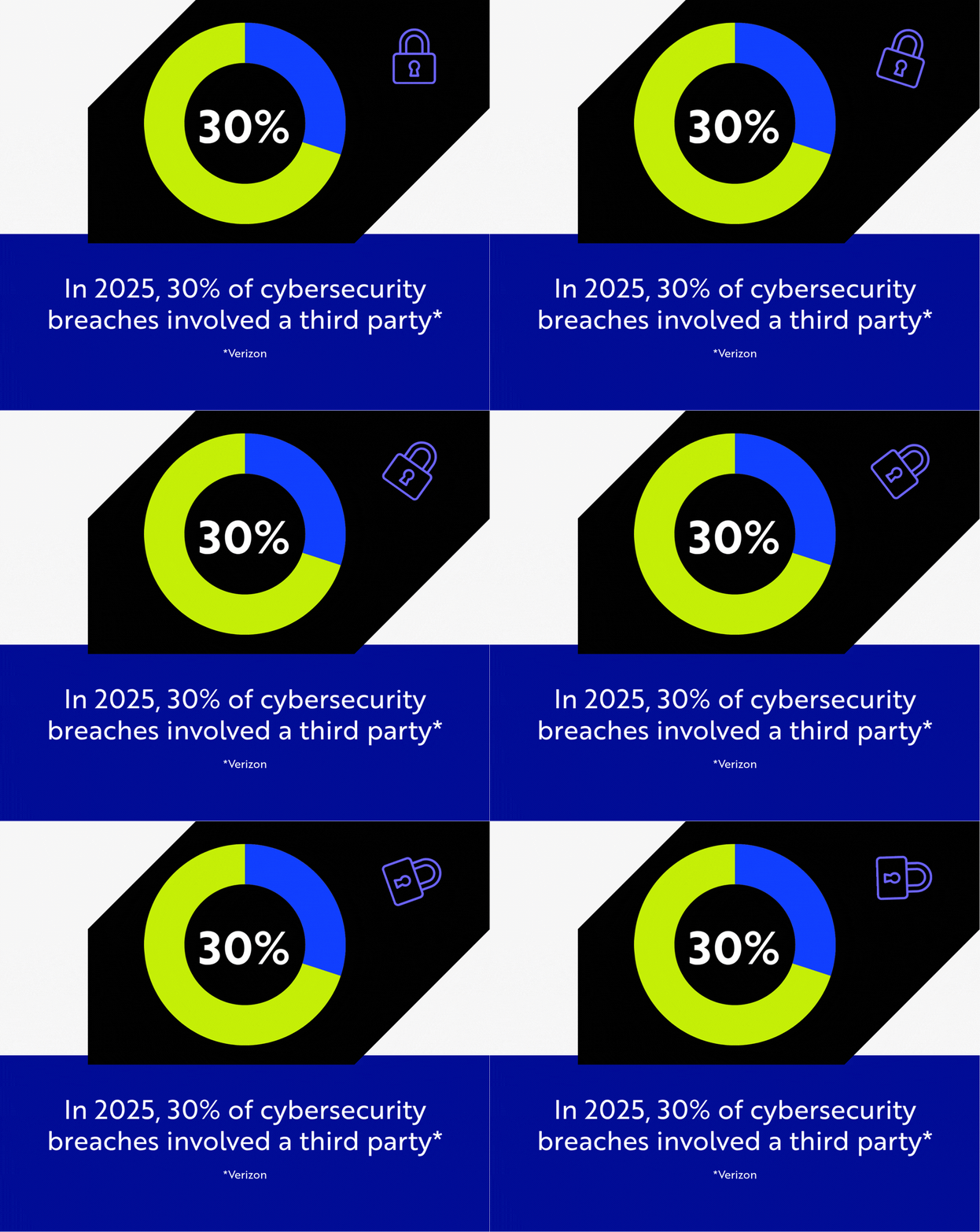
Look for a provider that ties detection directly to remediation. If your MDR service confirms a threat but a different company controls the affected systems, containment waits on that second company. Every added vendor also adds risk, and the Verizon 2025 Data Breach Investigations Report found that third-party involvement in breaches doubled to 30 percent.
Next, ask where your CUI will live. Some providers host CUI inside their own infrastructure and charge a monthly fee for access. That hosted model is the main reason an MSP needs its own CMMC Level 2 certification, because the provider's environment becomes part of your assessment scope. It also ties your compliance posture to the provider's business.
The risk is real. When NeoSystems shut down its CMMC operations without warning in May 2026, contractors hosted in its proprietary enclave lost a clear path to their CUI environments. NeoSystems had earned a perfect CMMC Level 2 score 14 months earlier, and that certification did nothing to protect its clients.
A customer-owned enclave avoids that dependency. The environment sits in your own government cloud tenant, you hold the credentials, and your SSP stays with you if you switch providers. Ask every provider who owns the enclave, and get the answer in your contract.
Finally, confirm credentials. A Cyber AB Registered Provider Organization is authorized to guide contractors through readiness, and the Cyber AB Marketplace lists active RPOs. A C3PAO performs the formal assessment and cannot assess an organization it consulted for, so plan on separate firms for preparation and assessment. Compass has separate guides on how to choose an RPO and how to select a C3PAO for Level 2.
How does vCISO advisory strengthen CMMC readiness?
A vCISO gives your CMMC program a clear owner. Without executive security leadership, compliance work often stalls at the documentation stage because no one connects technical controls to business priorities and contract timelines.
CompassMSP's vCISO advisory practice assigns a named security leader who owns your risk posture, turns SOC findings into governance decisions, and produces the reporting prime contractors expect. While Phase II is suspended, your SPRS self-assessment is the main record of your NIST SP 800-171 posture, and your vCISO keeps that score accurate and defensible. Compass builds the security roadmap and stays accountable for carrying it out.
The standard behind CMMC will also change. Compass explains what the move to NIST SP 800-171 Revision 3 means for defense contractors, and a vCISO keeps your program ready for that transition.
Why CompassMSP is the best managed cybersecurity provider for CMMC compliance
Defense contractors need a partner that can run 24/7 security operations, provide executive advisory tied to contract eligibility, and maintain the controls and documentation CMMC requires. Most providers handle one of those jobs well. CompassMSP delivers all three through one accountable team.
The closed-loop model is the core advantage. When the Compass SOC detects a threat, the team that runs your managed IT environment contains, patches, and remediates it. When your vCISO finds a governance gap, the technical team implements the fix and records the evidence. Your enclave stays in your own tenant the entire time.
The Phase II suspension changed the timeline, and your DFARS and NIST SP 800-171 obligations still apply. The right direction begins with a partner you trust. Schedule a consultation with Compass to map your gaps and build a plan, or start with the CEO's CMMC Level 2 readiness checklist.

Jim Ambrosini
Jim is an award-winning CISO and cybersecurity advisor with over two decades of experience helping organizations protect what matters most: their customers, their data, and their reputation.