

Published: Updated: Paul Breitenbach 7 min read
.gif?width=1000&name=Copy%20of%20Blog-Featured%20(6).gif)

Key Takeaways
- Managed IT services for regulated businesses combine proactive monitoring, cybersecurity, and compliance oversight under one accountable partner.
- A qualified provider supports frameworks such as HIPAA, CMMC, NYDFS Part 500, PCI DSS, and SOC 2 alongside everyday IT support.
- Compliance obligations differ sharply by industry, so the right partner tailors controls and documentation to the regulators you actually answer to.
- Compliance-focused providers maintain evidence like System Security Plans and Plans of Action and Milestones year-round, so audits become checkpoints rather than fire drills.
- CompassMSP pairs 24/7 U.S.-based monitoring with vCIO and vCISO guidance and hands-on audit support across seven regulated industries.
What Are Managed IT Services for Regulated Businesses?
Managed IT services give you a dedicated team that monitors, maintains, and secures your technology infrastructure. For regulated businesses such as healthcare practices, financial firms, and manufacturers that handle controlled data, these services reach well beyond helpdesk support.
Your provider becomes accountable for uptime, security posture, and compliance documentation. The objective is straightforward: keep your systems running and your auditors satisfied without standing up an enterprise-sized IT department in house.
Why Compliance Matters in Managed IT Support
Regulations like HIPAA, CMMC, PCI DSS, and NYDFS Part 500 carry real consequences. Fines accumulate quickly after a failed audit or an exposed record, and reputational damage can take years to repair.
The threat environment explains the urgency. The FBI's Internet Crime Complaint Center logged more than $16.6 billion in reported cybercrime losses in 2024, a 33 percent jump over the prior year. Regulators have responded by tightening requirements and raising penalties across nearly every regulated sector.
Many IT providers close tickets and move on. That approach leaves gaps between your technology environment and your compliance obligations. A compliance-focused provider treats security controls, access management, and audit documentation as core deliverables rather than afterthoughts.
Core Components of Compliance-Ready Managed IT Services
24/7 Network Monitoring and Threat Detection
Round-the-clock monitoring catches issues before they become outages or breaches. For regulated organizations, that means real-time visibility into who accesses what, when, and from where. Most frameworks require you to show that you detect and respond to threats promptly, and a provider with a U.S.-based Security Operations Center delivers that capability without the cost of staffing one yourself.
Endpoint Protection and Patch Management
Every laptop, workstation, and mobile device is a potential entry point. Managed IT services include endpoint detection and response, regular patching, and device management to close those gaps. Auditors expect evidence that systems stay current, so a strong provider automates patch schedules and keeps the logs that prove it.
Access Control and Identity Management
Can you prove exactly who has access to sensitive data? Compliance frameworks demand a clear answer. Managed IT services include identity management, multifactor authentication, and role-based access controls. These measures limit exposure and create the audit trail regulators expect.
Compliance Documentation and Audit Preparation
A passing audit takes more than good intentions. You need System Security Plans, Plans of Action and Milestones, risk assessments, and evidence that your controls work as documented. A compliance-ready provider maintains this paperwork year-round. CompassMSP manages more than 40 compliance controls on behalf of clients and keeps remediation plans on track, so audit day becomes a checkpoint rather than a scramble.
How Cybersecurity Fits Into the Managed IT Framework
Cybersecurity and compliance overlap heavily. Your compliance requirements set the minimum security controls, and your security posture determines whether you meet them. Managed cybersecurity services typically include managed detection and response, SIEM analytics, phishing simulations, and security awareness training. These components protect your data while satisfying mandates such as NIST SP 800-171 and the HIPAA Security Rule.
The Role of vCIO and vCISO Services
Strategic guidance often slips when teams focus on keeping systems online. Virtual CIO and Virtual CISO services fill that gap without adding executive payroll. A vCIO aligns your technology roadmap with business goals and budgets. A vCISO owns security strategy, risk assessments, and compliance planning, and signs off on the controls an auditor will scrutinize. In practice, that looks like a prioritized remediation roadmap, a board-ready risk report, and a documented rationale behind each security decision. Together these roles supply the leadership oversight that auditors and boards expect, right-sized for your organization.
Compliance Requirements by Industry
Compliance is not one standard. Each regulated sector answers to different regulators, deadlines, and penalties, so the controls and documentation that satisfy a hospital will not match what a defense manufacturer needs. Here is how the obligations differ across the industries that face the most scrutiny.
Healthcare
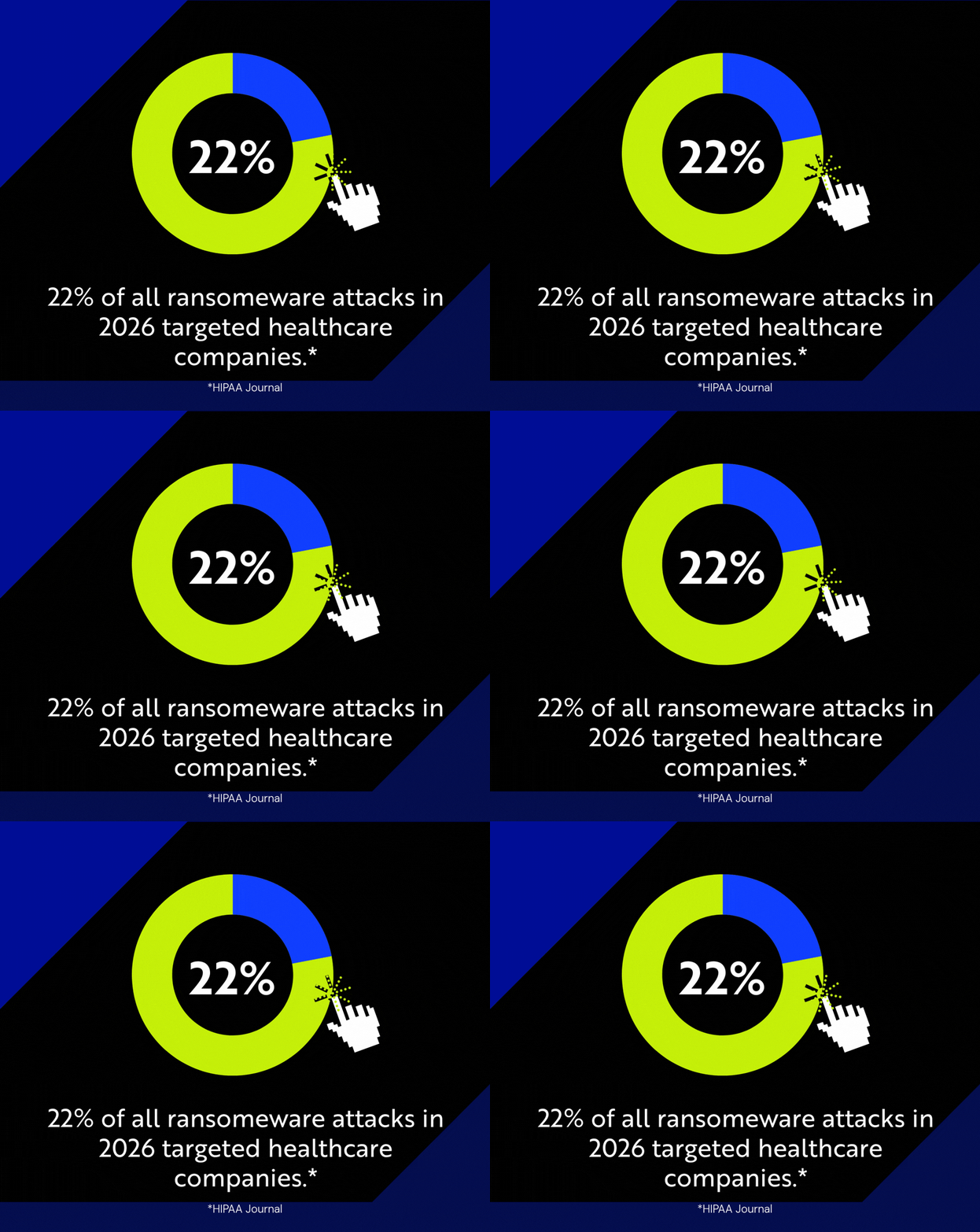
Healthcare organizations handle protected health information under HIPAA and, increasingly, pursue HITRUST certification to prove those safeguards work. The financial stakes climbed again this year: the maximum annual penalty for the most serious category of HIPAA violations now reaches $2,190,294 per identical provision, and large breaches must be reported to regulators and affected patients. A compliance-focused provider implements the technical and administrative safeguards the Security Rule requires and keeps the documentation that demonstrates them.
Financial Services
Banks, insurers, mortgage companies, and advisors that operate in New York fall under NYDFS Part 500, one of the most prescriptive cybersecurity rules in the country. As of November 1, 2025, the regulation's Second Amendment is fully in effect. It requires multifactor authentication for virtually all access, a written asset inventory, cybersecurity incident notification within 72 hours, ransomware payment notification within 24 hours, and an annual compliance certification signed by senior leadership and due each April 15. Penalties can begin at $2,500 per day for an ongoing violation. Financial firms also answer to FINRA and SEC expectations, so a provider serving this sector builds controls that map across all of them.
Manufacturing and Defense
Manufacturers in the defense supply chain handle Controlled Unclassified Information and must meet the Department of Defense's Cybersecurity Maturity Model Certification. The program began appearing in contracts on November 10, 2025 and rolls out in four phases over three years. Most contractors need CMMC Level 2, which requires implementing all 110 security controls in NIST SP 800-171 and posting a score to the Supplier Performance Risk System. Any gaps allowed on a Plan of Action and Milestones must be closed within 180 days. Contractors that miss the mark lose their eligibility to bid. A provider experienced with CMMC manages your System Security Plan, scopes your environment, and prepares you for the required assessment.
.gif?width=940&height=788&name=Copy%20of%20Stats%20-%20Blog%20(9).gif)
Retail and Franchise
Retailers and multi-location franchises that process card payments must satisfy PCI DSS, the payment card industry standard for protecting cardholder data. Requirements span network segmentation, encryption, continuous monitoring, and annual assessments. A provider keeps the documentation and logs that simplify each assessment and supports rapid, secure growth across locations.
Insurance
Insurers protect policyholder data under state insurance laws and, in many states, under requirements modeled on the NAIC Insurance Data Security Model Law. Carriers that operate in New York also fall under NYDFS Part 500. The right partner aligns access controls, incident response, and reporting with each state's mandates.
Legal
Law firms hold privileged client information and answer to bar association duties of confidentiality, and a growing number of states now impose specific cybersecurity and breach-notification obligations. A single breach can jeopardize client trust and billable continuity at once. A provider protects confidentiality, secures matter data, and documents the controls that demonstrate due care.
Construction and Engineering
Construction and engineering firms increasingly handle CUI when they subcontract on government and defense projects, which pulls them into NIST SP 800-171 and CMMC obligations. They also manage sensitive bid, contract, and field data across distributed job sites. A provider secures field-to-office connectivity and applies the controls that contract terms require.
What to Look for in a Compliance-Focused Provider
Not every managed service provider handles regulated environments well. These markers separate compliance-capable partners from ticket-closers:
- Framework expertise. Direct, current experience with HIPAA, CMMC, PCI DSS, SOC 2, NYDFS Part 500, or your specific requirements.
- Documentation ownership. The provider maintains your SSPs, POA&Ms, and evidence collection rather than reminding you to do it yourself.
- Integrated security. Cybersecurity built into the IT support model, not bolted on later.
- Audit support. A track record of preparing clients for assessments and standing beside them through the process.
For a deeper checklist, CompassMSP's 12-question framework for choosing a managed IT provider for regulated businesses walks through the exact questions to ask a candidate before you sign.
How CompassMSP Approaches Managed IT for Compliance
CompassMSP delivers managed IT with compliance and cybersecurity woven into every engagement. One accountable partner owns your monitoring, security, and documentation, which removes the finger-pointing that comes with vendor sprawl. Services include 24/7 U.S.-based SOC monitoring, vCIO and vCISO advisory, and hands-on audit preparation for HIPAA, HITRUST, CMMC, PCI DSS, NYDFS Part 500, and more. That integrated model helps clients across seven regulated industries reach audit readiness without disrupting daily operations.
Take the Next Step
Compliance does not have to feel like a fire drill. Explore CompassMSP's Compliance & Risk Management services to see how a structured, continuously maintained program keeps you audit-ready and protects your revenue.
Want to stay ahead of changing rules? Subscribe to The Fine Print, CompassMSP's quarterly compliance newsletter that turns cybersecurity, privacy, and regulatory changes into plain-English takeaways for business leaders.


Paul Breitenbach
With nearly 20 years of experience designing enterprise-grade IT solutions, Paul specializes in supporting organizations that cannot afford downtime. Before becoming our CIO, he served as CIO of WorldwideIT, a Compass company, where he led large-scale infrastructure, cloud, and security initiatives for highly regulated industries.