
Go Back Up
73% of surveyed organizations use a hybrid cloud model.
Flexera State of the Cloud, 2026

of surveyed organizations use a hybrid cloud model.
Flexera State of the Cloud, 2026

29% of cloud infrastructure and platform spending is estimated to be wasted by surveyed organizations.
Flexera State of the Cloud, 2026

of cloud infrastructure and platform spending is estimated to be wasted by surveyed organizations.
Flexera State of the Cloud, 2026

57% of respondents said their most recent major outage cost more than $100,000.
Uptime Institute Outage Analysis, 2026

of respondents said their most recent major outage cost more than $100,000.
Uptime Institute Outage Analysis, 2026


One owner, every layer

Infrastructure Is a Stack, and Most Providers Only Cover Part of It

Outages rarely come from the layer you are watching. They come from the seam between two layers owned by different vendors. Compass manages the whole stack, so there is no seam to fall through.

LAYER 01

Connectivity & Carrier

Internet, SD-WAN, private circuits, and failover across every site. Cross-cloud traffic is routed over a coordinated backbone instead of whatever each provider defaults to.

LAYER 02

Network & Edge

Firewalls, switching, wireless, segmentation, and remote access, designed so a failure in one segment does not take the business with it.

LAYER 03

Compute & Hosting

Microsoft Azure, AWS, private cloud, on-premises servers, and hybrid combinations, sized for concurrent load rather than for a quiet Tuesday.

LAYER 04

Platform & Identity

Microsoft 365, Entra ID, virtual desktop, and application hosting, with identity treated as infrastructure because that is how attackers treat it.

LAYER 05

Data, Backup, & Recovery

Backup architecture, immutable copies, retention aligned to your obligations, and recovery testing on a schedule so restoration is proven rather than hoped for.

LAYER 06

Resilience & Continuity

Redundancy, multi-region design, failover, documented runbooks, and recovery objectives agreed with the business rather than assumed by IT.


What Keeping Infrastructure Stable Requires

"Always on" is a claim until someone can show you the architecture behind it. Four things make the difference between an environment that holds and one that does not.

Redundancy at the layer that fails

A second internet circuit does not help if the single firewall in front of it dies. Compass maps single points of failure across every layer and eliminates them in order of business impact, not order of convenience.

Capacity sized for peak, not average

Environments fall over during month-end close, enrollment week, or a product launch, when concurrent users multiply. Compass sizes and load-tests for the peak your business actually experiences.

Recovery that has been tested

A backup job reporting success is not a recovery capability. Compass runs scheduled restoration tests and documents the result, so recovery time and recovery point objectives are measured facts.

Monitoring with someone accountable

Telemetry nobody acts on is decoration. Compass monitors 24/7/365 with an engineer on shift, and every alert has a defined owner and escalation path.

Scale Without Constant Reengineering

Future-proof your business with infrastructure that expands naturally alongside your growth. You can add capacity and enter new markets without the typical cost, complexity, or technical debt of starting over from scratch.

Cloud strategy and planning

Cloud, On-Premises, or Hybrid, Decided on Evidence

Compass decides based on workload economics, latency, compliance obligations, and how your business runs.

Planning Priority Public Cloud Flexible Capacity On-Premises / Private Cloud Dedicated Infrastructure Hybrid Connected Environments
Best Fit Variable demand & distributed teams Dedicated workloads & infrastructure control Mixed workloads & phased migration
Capacity Add cloud resources as needed Plan dedicated capacity ahead Balance private capacity with cloud resources
Cost Planning Track usage, licenses & transfer fees Budget for hardware, hosting & upkeep Account for both environments & connectivity
Recovery Approach Cloud-based recovery resources Separate backup & recovery capacity Coordinated recovery across environments

The right fit depends on your workloads, budget, and recovery goals. Every model needs appropriate security controls and tested recovery.


telecom-overview-hero

Connectivity

Cross-Cloud Traffic on One Coordinated Backbone

When a site slows down, one team owns the answer rather than coordinating a conference call.

Most organizations did not design their connectivity. It accumulated. A circuit here, a VPN tunnel there, a cloud peering arrangement somebody set up for one project, and a different carrier at each site because that is who was available.

The result is traffic taking routes nobody chose, performance nobody can explain, and a support conversation that starts with three vendors blaming each other. Compass consolidates connectivity under one design and one accountable owner: carrier selection and procurement, SD-WAN, private interconnects between clouds, failover paths, and bandwidth sized for the applications that matter.


Data Protection That Stays
i
Stop treating backups as a storage chore and start treating data protection as an operational insurance policy.

Compass delivers infrastructure that enables rapid failover and off-site redundancy, ensuring your data remains accessible and untampered even in the face of localized disasters or sophisticated cyberattacks. We embed deep encryption, logging, and auditability into the recovery layer to support environments with strict compliance and high-availability expectations.


Strategic Cloud Strategy & Migration

Move workloads methodically to minimize risk and operational disruption.

Poorly designed environments create "technical debt", unpredictable costs, and security gaps that compound over time. Compass provides planned migrations with validation, testing, and rollback safeguards to ensure your transition is a catalyst for growth, not a source of friction. We treat infrastructure as a living system, prioritizing stability first, then optimization and scale.

  • 01
    telecom-audit-01

    Assess & Audit

    Evaluate performance, dependencies, and cost drivers. We conduct a deep-dive analysis of your current computing infrastructure and security posture to build a roadmap that ensures the move makes financial sense.

  • 02
    telecom-build-02

    Architect & Design

    Design the right mix of public, private, and hybrid environments. We architect a custom solution that balances performance and compliance, embedding encryption and access controls into the build from day one.

  • 03
    telecom-train-03

    Migrate & Modernize

    Move workloads methodically with zero operational disruption. Our staged migration process utilizes rollback safeguards and validation to ensure your team is trained and productive from the moment of go-live.

telecom-audit-01 telecom-build-02 telecom-train-03
ma-it-due-diligence-hero

Acquisition Infrastructure

Map Dependencies Before You Combine Environments

Understand what must connect, migrate, remain separate, or be replaced.

CompassMSP identifies cloud, network, identity, hosting, backup, and application dependencies, then builds a Day 1 infrastructure plan around availability, security, cost, and future growth.

  • Standardize systems and vendors
  • Retire duplicated tools and technical debt
  • Sequence changes around business continuity

Seamless Systems Integration for Unified Hybrid Operating Models

Bridge the gap between existing on-premise reliability and the agility of modern cloud services.

Many organizations benefit from a hybrid environment where specific workloads stay on-site for cost or compliance reasons. We provide the technical glue that ensures these disparate systems function as one cohesive ecosystem, eliminating the technical debt and operational silos that often hinder growth. By treating your infrastructure as a living system, we create a unified operating experience that prioritizes stability while enabling rapid scale.

apex-visibility-01

Hybrid Cloud Unity

Integrate local hardware with public cloud power.

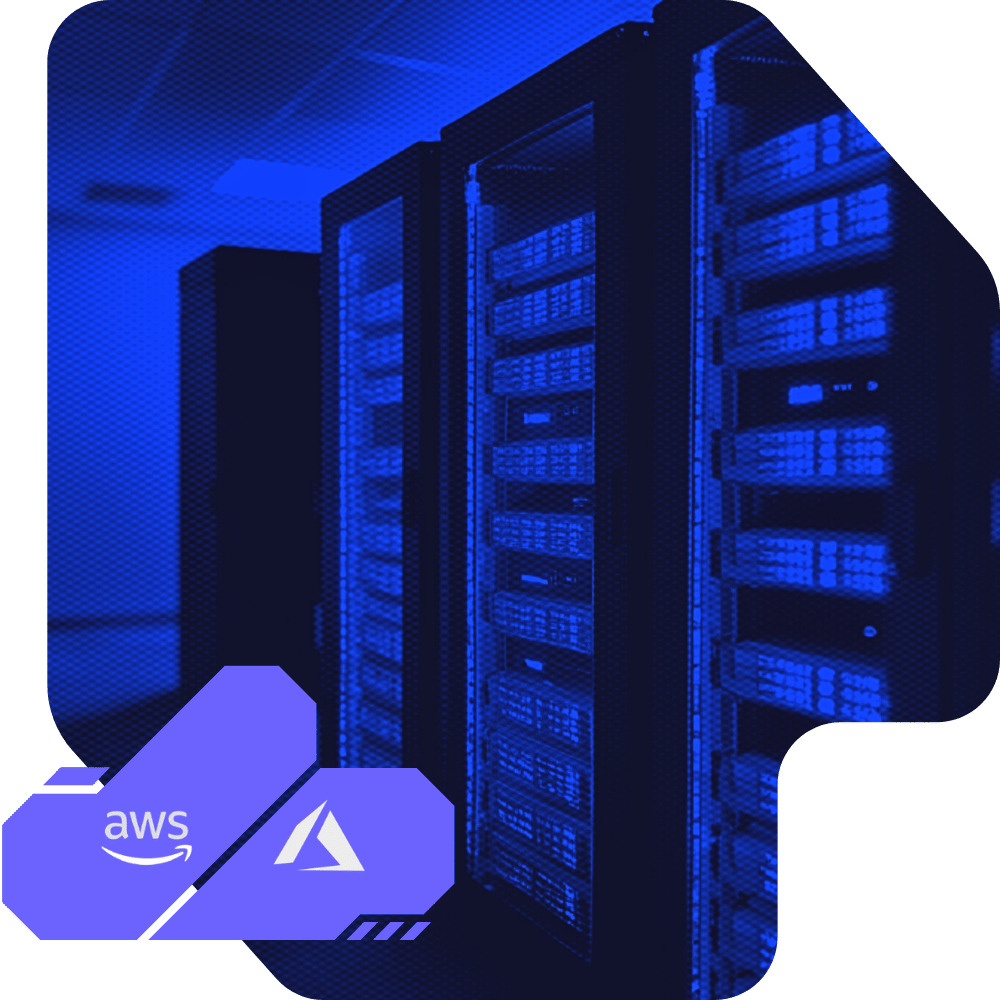
We engineer seamless pathways between your on-premise infrastructure and platforms like Azure or AWS, ensuring your data moves fluidly across your entire environment. This creates a centralized hub where your team can manage workloads without worrying about where the physical server resides.

apex-regulatory-02

Unified Security Posture

Apply standardized controls across every platform.

Don’t let your integration create a security gap; we embed uniform encryption and identity-driven access across your entire hybrid stack to maintain continuous compliance. This ensures that your security posture remains defensive and defensible, regardless of how your architecture evolves.

apex-cost-03

Modernized Legacy Workflows

Give your proven systems new operational speed.

We modernize your legacy workloads by connecting them to cloud-native tools, allowing you to improve operational efficiency without a total "rip-and-replace". This allows your business to leverage modern agility while maintaining the stability of your existing, high-performing systems.


Measured Results for Reliable, Always-On Infrastructure.

Outcome-driven architecture ensures your organization moves beyond technical debt and into measurable operational growth.
lightning
99.999% Proactive monitoring and redundant architecture eliminate single points of failure to keep your operations running around the clock with reliable system uptime. IBM

Proactive monitoring and redundant architecture eliminate single points of failure to keep your operations running around the clock with reliable system uptime. IBM

pie-chart
60% Hybrid backup strategies significantly reduce downtime by restoring critical business functions in a fraction of the time compared to legacy systems, resulting in faster operational recovery. IBM

Hybrid backup strategies significantly reduce downtime by restoring critical business functions in a fraction of the time compared to legacy systems, resulting in faster operational recovery. IBM

tune-adjust-volume
30% Strategic governance and continuous right-sizing eliminate resource waste to ensure your cloud investment is optimized for every dollar spent and results in lower monthly cloud spend. Flexera


Strategic governance and continuous right-sizing eliminate resource waste to ensure your cloud investment is optimized for every dollar spent and results in lower monthly cloud spend. Flexera

Network Architecture & Connectivity

Your cloud strategy is only as fast as the network that carries it.

Compass architects high-performance networks that treat connectivity as a living system. From dynamic traffic prioritization to proactive bottleneck detection, we ensure that physical distance never dictates your operational speed or compromises your security perimeter.

Architecting Networks That Never Go Dark

We implement SD-WAN and multi-homed ISP strategies to ensure your traffic always finds the fastest, most stable path available. By eliminating single points of failure at the network edge, your organization maintains constant access to critical cloud workloads and remote resources, even during localized carrier outages.

cloud-high-connectivity

Moving Beyond the Traditional Perimeter

Modern networks require more than just a firewall; they require internal guardrails that protect your most sensitive data. We leverage Zero-Trust architecture to segment your network, ensuring that a compromised device cannot move laterally through your environment. This approach secures your data at the packet level, aligning your infrastructure with strict regulatory compliance standards.

cloud-cybersecurity

High-Velocity Data Flow for Hybrid Models

Your cloud performance is inherently limited by your network’s latency and throughput. We design dedicated interconnects and optimized routing tables that treat your Azure or AWS tenants as local resources. This ensures that massive data transfers, real-time application syncing, and heavy database queries happen without the bottlenecks typically associated with standard public internet paths.

cloud-hybrid-connect
router-wifi-network
High-Availability Connectivity

Eliminate downtime with automated path failover and redundant carrier circuits that keep your team online.

Architecting Networks That Never Go Dark

We implement SD-WAN and multi-homed ISP strategies to ensure your traffic always finds the fastest, most stable path available. By eliminating single points of failure at the network edge, your organization maintains constant access to critical cloud workloads and remote resources, even during localized carrier outages.

cloud-high-connectivity
padlock-shield
Zero-Trust
Cybersecurity

Secure internal traffic with identity-driven micro-segmentation that stops threats from moving laterally.

Moving Beyond the Traditional Perimeter

Modern networks require more than just a firewall; they require internal guardrails that protect your most sensitive data. We leverage Zero-Trust architecture to segment your network, ensuring that a compromised device cannot move laterally through your environment. This approach secures your data at the packet level, aligning your infrastructure with strict regulatory compliance standards.

cloud-cybersecurity
nfc-lock
Hybrid Cloud Interconnects

Bridge the speed gap between on-premise hardware and public cloud environments for seamless data flow.

High-Velocity Data Flow for Hybrid Models

Your cloud performance is inherently limited by your network’s latency and throughput. We design dedicated interconnects and optimized routing tables that treat your Azure or AWS tenants as local resources. This ensures that massive data transfers, real-time application syncing, and heavy database queries happen without the bottlenecks typically associated with standard public internet paths.

cloud-hybrid-connect

aws-azure-cloud-infrastructure

PUBLIC CLOUD GOVERNANCE

Platform-Specific Expertise for Azure & AWS Environments

CompassMSP’s managed public cloud services help you control costs, strengthen security, and plan for growth across Microsoft Azure and AWS. Our engineers manage licensing, monitor resource usage, and configure access controls to support your business requirements. Separately scoped cloud migrations include testing and transition planning to limit disruption, followed by ongoing management to support performance and reliability.

BUSINESS CONTINUITY & DISASTER RECOVERY

Resilient Business Continuity Strategies That Turn Backups Into Recovery

Backups are a commodity. Rapid recovery is the strategy.

Infrastructure must be able to withstand scrutiny and stay secure under pressure. Most organizations mistake saving a file for a disaster recovery plan; Compass moves you beyond simple storage to a state of constant readiness. We deliver off-site backups, immutable storage, and rigorously tested recovery blueprints that ensure your business doesn't just survive an incident, but resumes operations before the fallout can begin.

FEATURED RESOURCES

Make Informed Cloud Decisions

Stay sharp. Stay secure.

Explore practical guidance on cloud strategy, network performance, and disaster recovery to help you plan upgrades, evaluate costs, and strengthen business continuity.
Franke Tobey Jones Achieves Uptime and Growth with Retirement Community IT Services

Compliance & Risk IT Modernization Cloud & Infrastructure

Franke Tobey Jones Achieves Uptime and Growth with Retirement Community IT Services

Franke Tobey Jones modernized its IT infrastructure with CompassMSP, achieving reliable connectivity, enhanced security, and continuous HIPAA compliance for optimal resident care and future growth.
Telescope Health Delivers Better Patient Outcomes with Managed IT Services for Healthcare

Cybersecurity IT Modernization Cloud & Infrastructure

Telescope Health Delivers Better Patient Outcomes with Managed IT Services for Healthcare

Telescope Health improved patient outcomes and HIPAA compliance by transitioning to managed IT services, enhancing system reliability, security, and strategic growth in telehealth.
Jacksonville Humane Society Protects 140-Year Legacy with Nonprofit IT Services

Cybersecurity IT Modernization Cloud & Infrastructure

Jacksonville Humane Society Protects 140-Year Legacy with Nonprofit IT Services

Discover how the Jacksonville Humane Society transformed its IT infrastructure with CompassMSP, achieving cost savings, improved efficiency, and enhanced cybersecurity to better serve its mission.
The Five Steps to Implement Cloud Solutions: A Guide for Business Leaders

IT Modernization Cloud & Infrastructure Articles 7 min read

The Five Steps to Implement Cloud Solutions: A Guide for Business Leaders

Guide for business leaders on implementing cloud solutions, emphasizing defining outcomes, choosing the right model, ensuring security, migrating in phases, and continuous optimization.

FAQs

Answers Regarding Cloud & Infrastructure Services

Strategic infrastructure management is a critical business function that affects your cost predictability, your security posture, and your ability to recover when the unexpected occurs. IT and operations leaders evaluating infrastructure partners ask these questions most often.

What are managed cloud and infrastructure services?

 Managed cloud and infrastructure services provide ongoing administration, monitoring, and support for the systems your business relies on. CompassMSP’s scope can cover networks, connectivity, Microsoft Azure, AWS, private cloud, on-premises servers, identity, and backup oversight. Responsibilities are defined across Compass, your team, and platform providers. Design, migration, and IT modernization projects are scoped separately from ongoing managed services. 

How do you maintain stable performance and uptime during high-volume operations and concurrent user scaling?

 Compass evaluates peak demand, application dependencies, capacity limits, and single points of failure. The agreed design can include load testing, redundancy, performance monitoring, and escalation procedures. Capacity and failover arrangements are reviewed as requirements change, helping your environment support busy periods such as month-end close or enrollment. Our guide to network performance and telecom stability explains how connectivity affects business operations. 

Can you simplify cross-cloud traffic on a unified backbone?

 Compass can help coordinate connectivity across cloud platforms and business locations through a shared network design. Depending on your environment, this may include SD-WAN, private interconnects, carrier coordination, and failover paths. The goal is clearer routing, manageable performance, and defined support responsibilities. The design depends on available carrier and cloud services; it does not require a Compass-owned backbone. Explore the considerations behind network performance and connectivity planning. 

Should we move to the cloud, stay on-premises, or run hybrid?

 The right choice depends on workload demand, latency, application compatibility, cost, and data-handling requirements. Public cloud can suit variable demand and distributed teams. On-premises or private infrastructure can suit workloads needing dedicated capacity or local processing. Hybrid combines environments when different systems have different needs. Compass evaluates these trade-offs before recommending a direction. Our cloud vs. on-premises comparison explains the decision factors. 

How do you approach disaster recovery and multi-region resilience?

 Recovery planning starts with business priorities. Recovery time objectives define the target time to restore a system, while recovery point objectives define the acceptable amount of data loss measured in time. Compass uses those targets to plan backup, replication, recovery capacity, and testing within the agreed scope. Multi-region designs can add geographic resilience where justified by the workload and budget. Learn how disaster recovery and business continuity work together. 

What does data backup infrastructure design involve?

 Backup design identifies which systems and data need protection, how frequently copies are created, where they are stored, and how long they are retained. It also addresses access controls, isolation, immutability where supported, and restoration testing. These decisions reflect business priorities and applicable retention requirements. Our ransomware recovery guide explains why protected backups and tested recovery procedures belong in the same plan. 

What is included in cloud strategy and planning?

 Cloud strategy begins with an assessment of workloads, dependencies, licensing, costs, and business requirements. Deliverables can include a target architecture, cost comparisons, migration priorities, and a technology roadmap. Where vCIO guidance is included in your engagement, that roadmap informs ongoing budget and lifecycle decisions. Planning deliverables and implementation projects are defined in your scope. Learn how vCIO guidance supports technology investment decisions. 

Do you manage hybrid infrastructure across cloud and on-premises?

 Yes. Compass can manage supported cloud and on-premises systems under a coordinated operating plan. Responsibilities may include identity integration, network connectivity, patching, monitoring, and backup oversight across environments. For organizations retaining internal IT staff, co-managed IT defines which work stays with your team and which responsibilities Compass handles. 

Will you work with our existing cloud platforms and tools?

 Compass reviews your existing platforms and tools during discovery, including Azure, AWS, Microsoft 365, and your backup, monitoring, and network systems. We identify what can be supported, what requires integration, and where changes may be needed. Recommendations explain the operational, security, and cost implications before your team approves a change. 

How does infrastructure work connect to security?

 Infrastructure decisions affect access, configuration, patching, segmentation, and recovery. Coordinating that work with security monitoring helps teams investigate findings and implement authorized improvements. Essentials is included with Compass Managed IT; security coverage for standalone cloud engagements is defined separately. Additional tiers of the Apex Security Platform, including Core Defense, provide dedicated analyst monitoring and response capabilities within the selected scope. 

How long does a cloud migration take?

 Migration timelines depend on workload count, data volume, application dependencies, available bandwidth, testing, and acceptable change windows. Compass establishes the schedule during assessment, including migration stages, validation, and rollback planning. Migrations are separately scoped projects, coordinated with ongoing operations to limit disruption. Explore how IT modernization connects assessment, implementation, and ongoing support. 

Can you support organizations with compliance or data residency requirements?

 Yes. Compass incorporates identified data-location, access, retention, and recovery requirements into infrastructure planning. Evidence can include configuration records, patch reports, access reviews, and backup test results for systems within scope. The Compliance & Risk Management practice provides separately scoped assessment, remediation planning, and audit support. Hosting data in a particular location does not establish compliance by itself, and readiness support does not replace independent assessment or certification where required. 

How do I get started?

 Talk with Compass about your infrastructure, including what you run today, recurring problems, and upcoming growth or changes. Together, we can define the assessment scope and identify priorities for capacity, connectivity, recovery, and security. Findings then inform a proposed service scope, project plan, and budget. 


Build the Backbone Before the Business Outgrows It.

Your business depends on systems that stay available, recover fast, and scale without friction. Compass delivers cloud and infrastructure services that quietly do their job so your teams can do theirs.

Ready to secure your future? Here is what happens next:

  • Discovery
    We schedule a brief call to understand your pain points.

  • Assessment
    We review your current infrastructure and security posture.

  • Roadmap
    We present a right-sized plan to modernize and secure your business.
Next Section