

Published: Jim Ambrosini 14 min read


There is a good chance you have never heard of CIRCIA. That is about to change.
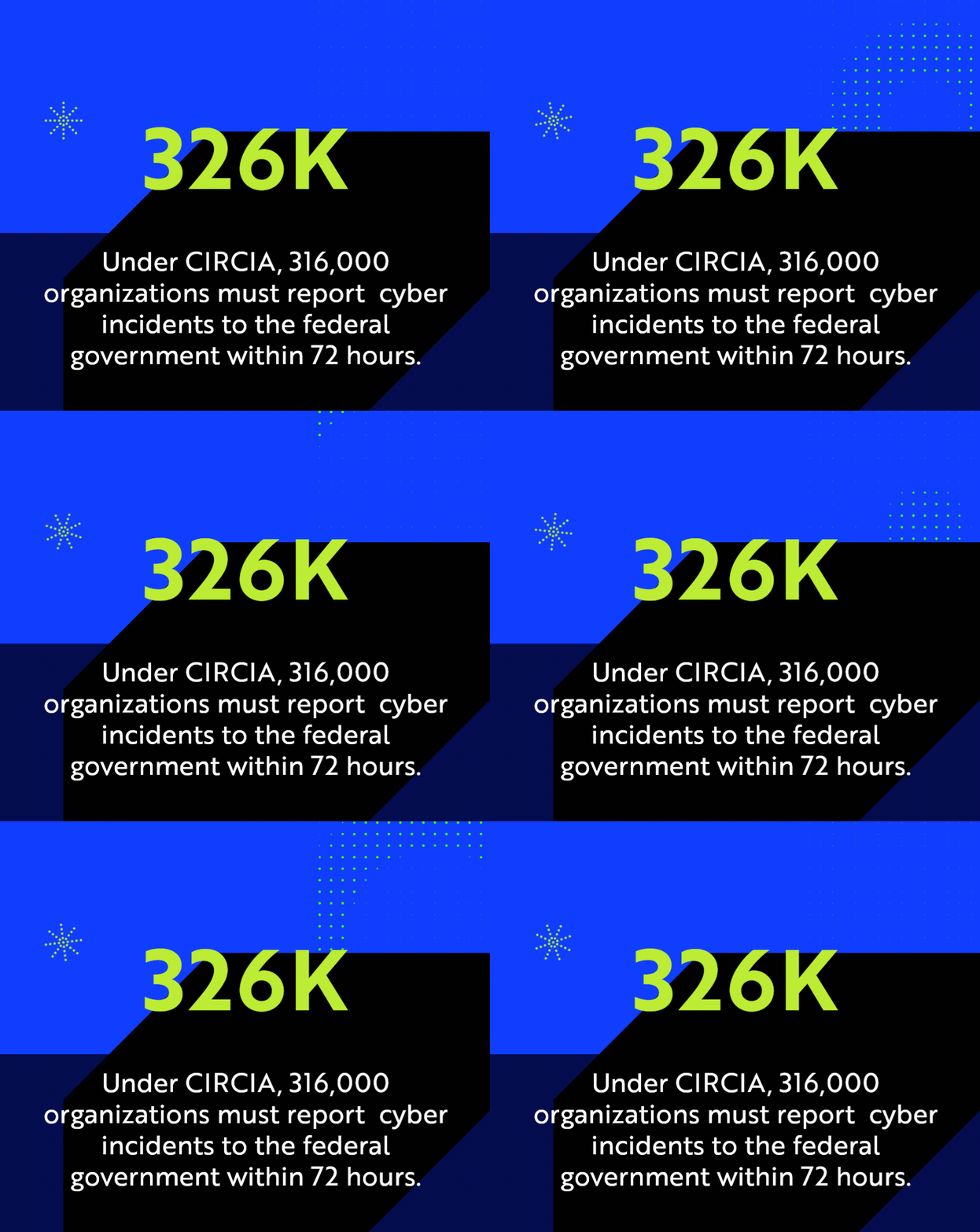
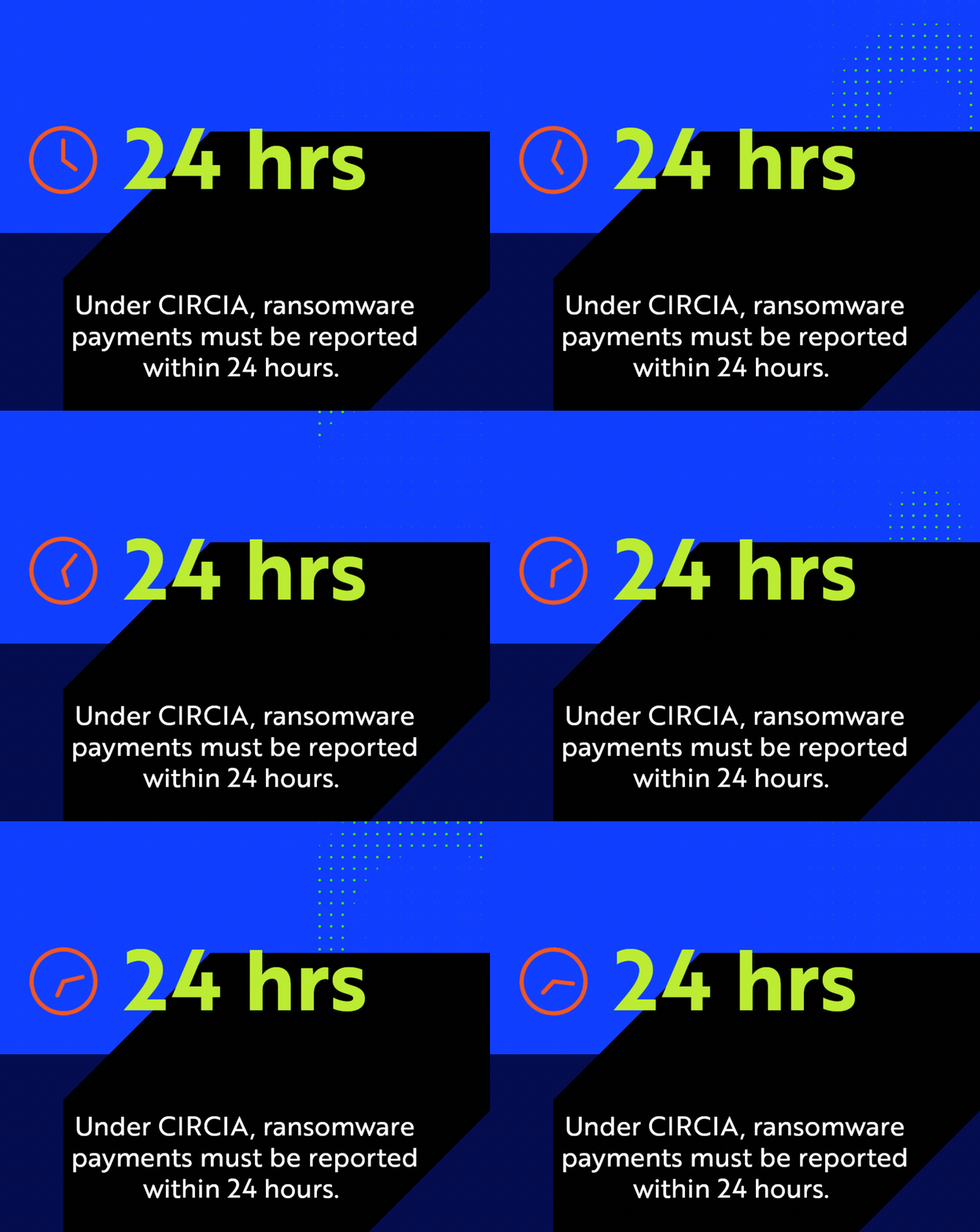
CIRCIA stands for the Cyber Incident Reporting for Critical Infrastructure Act, and it has been four years in the making. Congress passed it in 2022, gave CISA a deadline to finalize the rules by October 2025, and watched that deadline slip to May 2026, then September 2026, and then again to October 1, 2026, when CISA finally submitted the final rule to the White House for review. OMB has up to 90 days to complete that review, which means the rule could publish before December 31. When it does, an estimated 316,000 organizations across healthcare, finance, manufacturing, retail, and construction will be required to report substantial cyber incidents to the federal government within 72 hours and ransomware payments within 24 hours.
In this article:
- CIRCIA Exists Because the Government Was Flying Blind
- The Two-Track Coverage Model: Who Is a Covered Entity
- How Coverage Maps Across Five Regulated Industries
- The 72-Hour Clock: How It Works and Why It Is Harder Than It Sounds
- The Reporting Overlap Problem
- What to Build Before the Rule Publishes
- A Note on Timing
- How CompassMSP Supports CIRCIA Readiness
- FAQ
If that sounds like a short window, it is. And the 72-hour clock does not start when your forensic team finishes the investigation. It starts when someone in your organization reasonably believes an incident occurred. The difference between those two moments can be days.
Here is what CIRCIA is, whether it applies to your organization, and what to build before the rule drops.
CIRCIA Exists Because the Government Was Flying Blind
Before CIRCIA, the federal government had no systematic way to know that your organization had been breached unless you volunteered the information. Incident reporting to CISA was optional. That meant cyberattacks were spreading across critical sectors while CISA was watching from the outside, unable to identify patterns, warn targets, or deploy resources in time to matter.
The events that pushed Congress to act were not abstract. The SolarWinds espionage campaign compromised federal agencies and private companies simultaneously while going undetected for months. The Colonial Pipeline ransomware attack shut down fuel supply to the Eastern Seaboard. In both cases, the government learned about the incidents slowly, piecemeal, and far too late to intervene effectively.
CIRCIA changes that by making reporting mandatory. When the rule takes effect, a substantial cyber incident at your organization is no longer your private operational problem. It is a federal reporting obligation with a 72-hour deadline, a specific report format, follow-up reporting requirements as new details emerge, and two years of documentation retention. The mandatory structure lets CISA identify attack campaigns targeting multiple organizations simultaneously and issue warnings to organizations that have not yet been hit.
For businesses that have handled breaches quietly in the past, CIRCIA closes that option for covered entities. The report goes to CISA regardless of whether affected customers are notified, regardless of whether law enforcement is involved, and regardless of whether the organization believes the situation is under control.
The Two-Track Coverage Model: Who Is a Covered Entity
Coverage under CIRCIA’s proposed rule is determined by two separate tracks. An organization needs to meet only one of them to be a covered entity.
The first track is size-based. Any entity operating in one of the 16 critical infrastructure sectors that exceeds the Small Business Administration’s size standards for its specific NAICS code is a covered entity. The SBA size standards vary significantly by sector and subsector, ranging from 100 to 1,500 employees or between $2.25 million and $47 million in annual revenue depending on the industry. Meeting the size test requires checking your organization’s NAICS code against the SBA’s current size standard table, not making a general estimate. Many organizations that do not think of themselves as large enough to be covered will find that the size threshold for their specific subsector is lower than assumed.
The second track is sector-based. Certain categories of entities are covered regardless of their size because of the outsized risk their disruption would pose. Under the 2024 proposed rule, sector-based criteria captured hospitals with 100 or more beds, critical access hospitals regardless of size, manufacturers of Class II or III medical devices, entities that provide operationally critical support to the Department of Defense or process covered defense information, entities that own or operate critical manufacturing sector infrastructure, and entities that provide wire or radio communications service, among others.
The sector-based track is where organizations most commonly make incorrect assumptions about their coverage status. A small rural hospital that falls well below the SBA revenue threshold for healthcare is still a covered entity under the sector-based criteria because it is a critical access hospital. A five-person defense subcontractor handling CUI is still a covered entity. A mid-sized medical device manufacturer is still covered. The size of the organization does not determine coverage when the sector-based criteria apply.
The final rule may adjust both tracks. The proposed rule drew significant industry criticism for its broad scope, and comments on the proposal focused heavily on the scope of covered entities, incident reporting triggers, and the need to harmonize CIRCIA with existing federal, state, and international reporting obligations. CISA acknowledged the concerns and held more than 1,200-attendee town halls in June 2026 to gather additional feedback. The scope in the final rule may be narrower than the proposed 316,000 entities. It is also possible the sector-based criteria were adjusted. Because the final rule text is not yet public, the responsible approach for any organization in a covered sector is to assess coverage against the 2024 proposed criteria now and revisit that assessment when the final rule publishes.
How Coverage Maps Across Five Regulated Industries
The 16 critical infrastructure sectors overlap directly with five of the seven industries The Fine Print newsletter covers every quarter.
Healthcare and Public Health is explicitly one of the 16 sectors. Under the proposed rule, covered healthcare entities include hospitals with 100 or more beds, all critical access hospitals regardless of size, any healthcare or public health entity that exceeds SBA size standards for its NAICS code, and manufacturers of Class II or III medical devices. For the healthcare industry, CIRCIA adds a 72-hour incident reporting obligation to CISA that runs parallel to and separately from HIPAA’s breach notification requirements. The two clocks start at different triggers and run to different regulators.
Financial Services is one of the 16 sectors. Financial institutions, insurance companies, broker-dealers, and investment advisers that exceed SBA size standards for their financial services NAICS codes are covered. For organizations already subject to NYDFS Part 500, SEC Regulation S-P, or FINRA supervision, CIRCIA creates an additional reporting obligation to CISA that must be satisfied alongside existing regulatory notification duties.
Critical Manufacturing and the Defense Industrial Base are two of the 16 sectors. Manufacturers of primary metals, machinery, electrical equipment, and transportation equipment are covered under Critical Manufacturing. Defense contractors and subcontractors that handle Controlled Unclassified Information or provide operationally critical support to the DoD are covered under the Defense Industrial Base sector-based criteria regardless of size. For defense contractors already reporting cyber incidents to the DoD within 72 hours under DFARS 252.204-7012, CIRCIA creates a second 72-hour reporting obligation to a different federal agency, with different report contents, follow-up reporting requirements, and a two-year data retention obligation versus the existing 90-day retention requirement under defense rules.
Commercial Facilities is one of the 16 sectors and is the sector most relevant to retailers. Under the proposed rule, large retail establishments that exceed SBA size standards for commercial facilities fall within the Commercial Facilities sector. The sector also includes entertainment venues, sports leagues, real estate operators, and lodging facilities. Retailers that believe they are outside of CIRCIA’s scope because they are not a hospital or a defense contractor should run the size-standard analysis against the Commercial Facilities sector criteria before concluding they are exempt.

The 72-Hour Clock: How It Works and Why It Is Harder Than It Sounds
The statutory 72-hour reporting deadline is not a 72-hour investigation window. Under CIRCIA, the clock starts when the covered entity reasonably believes a covered cyber incident has occurred, not when the investigation confirms it. The word “reasonably” matters. CISA has indicated that covered entities do not need certainty before the reporting obligation attaches. A plausible belief that a substantial incident occurred is sufficient.
In practice, the first 72 hours of a serious cyber incident are consumed by incident response operations: containing the spread, assessing the scope, engaging forensic support, communicating internally, and deciding whether to pay a ransom. For organizations that have never built a CIRCIA-specific reporting workflow into their incident response plan, the reporting obligation is an additional parallel task running against a clock that many teams will not have capacity to meet.
What makes the 72-hour window especially demanding is that the initial report to CISA does not need to be a complete or final account of the incident. CIRCIA requires a preliminary report within 72 hours followed by supplemental reports as new information becomes available. The initial report needs to include what happened to the extent known, when it happened, what systems or data were affected, the nature of the vulnerability that was exploited, and information to help CISA identify whether other organizations are facing the same threat. That is enough information to require a process, not just a notification.
The Reporting Overlap Problem
One of the most significant practical complications CIRCIA creates for organizations in regulated industries is the overlap with existing incident reporting requirements. For the industries covered in this newsletter, that overlap is not theoretical.
Healthcare organizations face HIPAA’s breach notification requirements alongside CIRCIA. HIPAA’s trigger is unauthorized access to protected health information. CIRCIA’s trigger is a substantial cyber incident regardless of whether PHI is involved. HIPAA’s deadline is 60 days from discovery to notify affected individuals. CIRCIA’s deadline is 72 hours from reasonable belief of occurrence to report to CISA. The two regimes apply simultaneously, run on different clocks, and report to different agencies. An incident that triggers both requires a coordinated response that handles both obligations in parallel.
Financial organizations face the most complex multi-regulator environment. NYDFS Part 500 requires 72-hour incident reporting and 24-hour ransomware payment notification to NYDFS. SEC Regulation S-P requires customer notification within 30 days of a breach. CIRCIA requires 72-hour reporting and 24-hour ransomware payment notification to CISA. For a New York-licensed investment adviser subject to all three regimes, an active ransomware incident creates three simultaneous notification obligations to three different regulators and to affected customers, each with its own deadline, content requirements, and documentation obligations. That does not happen successfully without having been planned in advance.
Defense contractors under DFARS 252.204-7012 already report to the DoD within 72 hours. CIRCIA creates a second 72-hour obligation to CISA. The two reports differ in required content, follow-up requirements, and retention obligations. Contractors should not assume that satisfying one satisfies the other.
What to Build Before the Rule Publishes
The preparation steps that make organizations ready to operate on a 72-hour clock are, in almost every case, the same steps that strengthen their overall incident response capability. The compliance infrastructure that CIRCIA requires is not separate from good cybersecurity practice. It is an operationalized version of it.
-
The first step is a coverage determination. Run the size-standard analysis against the specific SBA NAICS code for your primary business activity. Then evaluate the sector-based criteria for every covered sector your operations touch. Document your conclusion in writing. When the final rule publishes, revisit that analysis against the final text. Organizations that have done this work once can update it quickly. Organizations that have not done it at all will discover their coverage status at the worst possible time.
-
The second step is a 72-hour detection-to-report audit. Map the path from initial detection of a potential incident to a completed preliminary report to CISA. Identify every step in that path, who is responsible for it, what information they need to complete it, and how long it realistically takes under operational pressure. For most organizations, that audit reveals that the existing incident response plan was designed to investigate incidents thoroughly, not to report them to a federal agency within 72 hours of a reasonable belief they occurred.
-
The third step is incident classification criteria. CIRCIA applies to substantial cyber incidents, a term the proposed rule defines broadly. Organizations need written criteria that allow their incident response teams to quickly assess whether a detected event meets the threshold for a CIRCIA report without requiring legal review for every anomaly. Those criteria should be developed with legal counsel and built into the incident response plan before an incident occurs.
-
The fourth step is a multi-regulator notification matrix. For every reporting obligation that currently applies to your organization, build a single reference document that shows the regulator, the deadline, the trigger event, the required content, and the responsible person. When CIRCIA takes effect, add it to the matrix. Organizations that have mapped all of their notification obligations in one place before an incident are the ones that meet multiple deadlines simultaneously during one.
-
The fifth step is a 24-hour ransomware payment process. The ransom payment reporting obligation is 24 hours, not 72. For organizations in covered sectors, paying a ransom without a pre-built payment notification workflow creates a near-certain deadline miss under conditions where the organization is already in crisis. If your organization’s ransomware response policy allows for the possibility of a payment, the CIRCIA notification process for that scenario should be built before it is needed.
A Note on Timing
CIRCIA reporting is not mandatory until the final rule takes effect. CISA has explicitly confirmed that covered cyber incident and ransomware payment reporting under CIRCIA will not be required until the final rule goes into effect. Even if the final rule publishes in December 2026 on the optimistic end of the OMB review window, the 60-day period before effectiveness would push the mandatory reporting date to late February 2027 at the earliest, with an additional implementation period possible.
The preparation work described above does not depend on the final rule text. Detection capability, incident classification criteria, 72-hour reporting workflows, and multi-regulator notification matrices are valuable under every outcome the final rule could produce. Organizations that use the remaining window before publication to build this infrastructure will be ready on day one of mandatory reporting. Organizations that wait for the final rule text before starting will be building under time pressure while simultaneously learning new compliance requirements.
How CompassMSP Supports CIRCIA Readiness
For small and mid-sized organizations in covered sectors, CIRCIA adds a federal incident reporting obligation to a compliance environment that is already demanding. CompassMSP works with healthcare providers, financial firms, manufacturers, and retailers to build the incident response programs, detection capabilities, and regulatory notification workflows that CIRCIA will require and that make organizations measurably more resilient regardless of which regulation is on the horizon.
Learn more about our compliance and cybersecurity services at compassmsp.com/solutions/compliance-risk.

Jim Ambrosini
Jim is an award-winning CISO and cybersecurity advisor with over two decades of experience helping organizations protect what matters most: their customers, their data, and their reputation.