


- | Home
- | Resources
- | Guides + Checklists
Get Your Kit
HEALTHCARE CYBER RISK ADVOCACY KIT
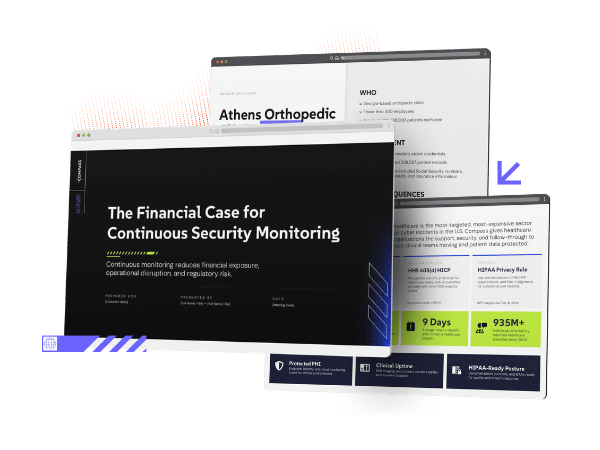
Your Cybersecurity Business Case
Healthcare IT professionals know they need more proactive security; in fact, 41% of healthcare IT professionals believe their organizations' financial commitments to cybersecurity are inadequate to support an effective strategy.
The challenge is convincing the executive team or the board to approve the budget. You need hard numbers to show the financial risk of doing nothing.
That’s why this kit exists. We took the numbers and crunched them for you so the number you share is not some vague industry average but real, data-backed evidence of the cost of a cyber event on your bottom line.
What You Will Get in Your Kit
- Average ransomware costs: See the exact healthcare ransomware average costs for your vertical.
- Lost revenue: Calculate the daily cost of operational downtime.
- Insurance hikes: Estimate your cyber insurance premium increases after an incident.
- Compliance penalties: Use the HIPAA compliance fines calculator to assess regulatory risk.
HEALTHCARE INDUSTRY EXPERTS
Tailored for Your Specific Vertical
Secure private practice data security and ensure specialty clinic HIPAA compliance.
Defend post-acute care cybersecurity and protect nursing home IT infrastructure.
Meet medtech startup compliance and establish pharma startup data protection requirements.
The Real Cost of Healthcare Cyberattacks
The average total cost of a healthcare data breach.

The average length of downtime after a ransomware attack on a medical facility.

The maximum annual HIPAA penalty for a single violation tier.
HIPAA COMPLIANCE SERVICES
The Regulatory Controls Healthcare Leaders Need to Prove
When OCR asks for evidence, basic compliance is not enough. Healthcare organizations need a clear, defensible way to identify risk, close control gaps, and show how they protect patient data. CompassMSP helps medical groups, dental practices, and health technology firms turn HIPAA and HITRUST expectations into documented, monitored, and sustainable safeguards.
FAQs
Questions About the Cost of a Cyber Breach For Healthcare Companies
This FAQ gives you quick, practical answers to the most common questions about the cost of a cyber breach, HIPAA and OCR fines, and ransomware costs for small and mid-sized healthcare companies.
How much does a data breach cost a private medical practice?
A breach can cost a private clinic hundreds of thousands of dollars. Costs include IT recovery, lost patient revenue, and legal fees. You also face potential regulatory fines.
What is the average HIPAA fine for a post-acute care facility?
Fines vary based on the level of negligence. The Office for Civil Rights can levy fines from a few hundred dollars up to $1.5 million per violation category.
How do I calculate the IT security budget for a medical startup?
You should align your budget with your specific risk profile and compliance needs. Most experts recommend allocating between 10% and 15% of your total IT budget to cybersecurity.
How do I build a business case for proactive healthcare cybersecurity?
You must focus on financial risk. Show your board the exact costs of downtime, ransom payments, and reputational damage. Compare those costs to the price of preventative security measures.
What makes healthcare data so valuable to hackers?
Medical records contain comprehensive identity information. Hackers sell this data on the dark web for identity theft and financial fraud. Medical files sell for a much higher price than credit card numbers.
How does ransomware affect patient care in specialty clinics?
Ransomware locks doctors out of electronic health records. Staff cannot access medical histories or treatment plans. This disruption forces clinics to cancel appointments and delay critical care.
Will cyber insurance cover all costs of a security breach?
Policies rarely cover the total cost of an incident. Insurance companies also deny claims if you fail to maintain basic security controls. You still have to pay deductibles and face higher premiums.
What are the biggest IT security risks for senior living centers?
Phishing emails remain the top threat. Staff members often click malicious links and accidentally expose patient data. Outdated software and unpatched medical devices also create major vulnerabilities.
Do small medical practices need the same security as large hospitals?
Yes. Hackers target small clinics because they usually have weaker defenses. Small practices still hold valuable patient data and must comply with the exact same HIPAA regulations.
How quickly can a healthcare business recover from a ransomware attack?
Recovery takes weeks or even months. You must rebuild servers, restore backups, and audit your entire
Featured Resources
Explore expert insights, practical tips, and real-world advice from our blog curated to help you make smarter tech decisions.
Cybersecurity eBooks
The 2026 Healthcare Data Security Handbook
Protect ePHI, prove security maturity, and turn compliance into a competitive advantage. A practical guide to HIPAA and HITRUST for mid-sized healthcare leaders, not just IT.
Healthcare Articles 6 min read
7 Things Healthcare Leaders Need to Know About HIPAA vs HITRUST
Explore the critical differences between HIPAA compliance and HITRUST certification, explaining how small to mid-sized healthcare organizations can protect patient data, ensure clinical uptime, and gain a competitive advantage through verified cybersecurity maturity.
Compliance & Risk IT Modernization