

Published: Updated: CompassMSP 14 min read


When security fails, it rarely fails quietly. Operations slow down, customers lose confidence, and vendors and insurers start asking questions. Leadership suddenly faces decisions no one wants to make: pay or don’t pay, disclose or don’t disclose, rebuild now or later, keep serving customers or shut down temporarily.
That is exactly why minimum security standards (MSS) matter. For a CEO, the term "minimum security standards" (MSS) might sound like a technical checklist buried somewhere in IT. In reality, MSS is the non-negotiable baseline for operational survival. It defines the essential controls every business needs to stay functional, resilient, and credible when modern threats show up, as they inevitably do.
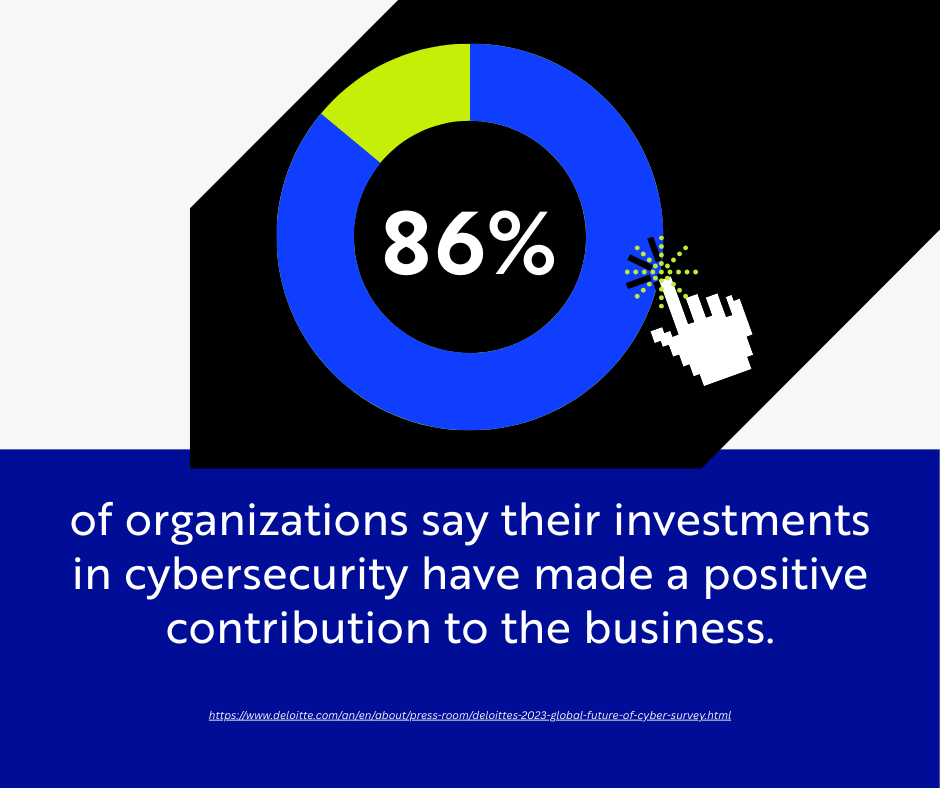
The most resilient companies already understand this. Deloitte’s 2023 Global Future of Cyber Survey found that 86% of organizations say their investments in cybersecurity have made a positive contribution to the business. When MSS becomes a strategic priority, the focus shifts. You no longer just fix technology; you strengthen the durability and long-term value of the company.
This article breaks down what MSS really are, why they matter for small to mid-sized businesses, and how they make cybersecurity practical, measurable, and manageable at the executive level.
What Are Minimum Security Standards (MSS)?
Cybersecurity Risk Management for Small Businesses: Why CEOs Should Care
MSS Protects the Business, Not Just the Network
The Security Controls That Turn Cyber Risk into a Manageable Problem
The Strategic Role of the CEO in Cybersecurity
How to Scale Security Without a Large Internal IT Team
Next Steps in Protecting Business Operations from Cyber Risk
Minimum Security Standards FAQs: Answers From a CISO
What Are Minimum Security Standards (MSS)?
Minimum security standards are the baseline security measures that every business should have in place, regardless of size or industry.
Think of MSS as the business version of sprinklers, smoke detectors, and fire doors. They’re not glamorous, but completely worth it. For small and mid-sized businesses, adhering to these standards is the most effective way to ensure business continuity and cybersecurity remain aligned.
Implementing MSS shifts an organization from a reactive, hope-for-the-best posture to a proactive, risk-managed state. Cybersecurity becomes something leaders can manage instead of being a constant fire drill.
And this isn’t theoretical. Cybersecurity spending keeps climbing because threats keep getting worse. Gartner projected worldwide spending on information security to reach $213 billion in 2025, a clear signal that risk is no longer abstract. It’s a standing business concern.
Cybersecurity Risk Management for Small Businesses: Why CEOs Should Care
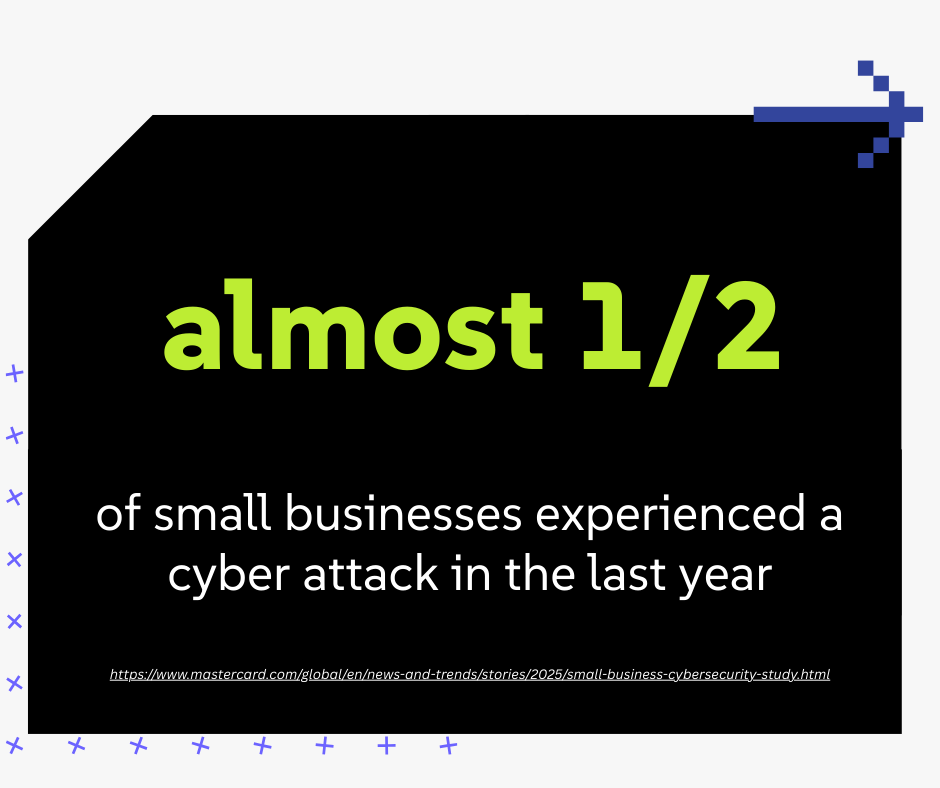
Many executives at smaller companies believe their size makes them invisible to hackers. The data suggests the opposite. Almost half of small businesses experienced a cyber attack in the last year, according to a recent study from Mastercard.
Without an executive cybersecurity strategy, a single breach can derail your business. And the cost goes far beyond a ransom or an IT repair bill. There’s the loss of customer trust, legal and regulatory fallout, and the decline in productivity when systems go dark.
For a CEO, the real risk is opportunity cost. Every hour spent recovering from a preventable incident is an hour not spent growing the business or serving customers. Establishing a clear security baseline protects your team’s time and the company’s future.
MSS Protects the Business, Not Just the Network
Most security conversations get trapped in tool talk: EDR, SIEM, MFA, DLP, and the rest of the acronym soup. MSS cuts through it by focusing on outcomes executives actually own:
1. Business continuity stays intact
Cyber attacks don’t only steal data; they interrupt cash flow. When ransomware hits, the immediate cost is often not the ransom. It’s the downtime, the rework, the customer churn, and the operational paralysis. MSS reduces the chance of a full stop and shortens recovery time.
2. Cyber risk becomes measurable and manageable
Security is stressful when it feels vague. MSS makes it concrete. Instead of “Are we secure?” the questions become:
- “Do we meet baseline standards for identity, backups, patching, and monitoring?”
- “Are the basics enforced consistently?”
- “Can the business recover within an acceptable window if systems go down?”
3. Customers and stakeholders stay protected
Leaders are investing more in digital trust and data protection because they know it protects the brand and keeps customers confident. Research from PwC backs this up: 77% of businesses plan to increase their cybersecurity budgets over the next year. Minimum security standards are where that investment becomes real through consistent controls, not empty promises.
4. Internal teams get their time back
Most small businesses do not struggle due to a lack of effort. They struggle because internal teams are overloaded. When minimum controls are not standardized, IT wastes its precious time on things like manual patching, “emergency” fixes, and endless firefighting. MSS replaces chaos with repeatable guardrails, preventing security from becoming a full-time distraction.
The Security Controls That Turn Cyber Risk into a Manageable Problem
To effectively reduce cyber risk for small businesses, leadership must focus on the core technical controls that form the backbone of the minimum security standards (MSS).
1. Identity and Access Management (IAM)
Most breaches occur because of stolen credentials. Implementing multi-factor authentication (MFA) is perhaps the single most important security control for business owners to mandate. It is a low-cost, high-impact barrier that stops the vast majority of automated attacks. When you control who has access to your systems, you control the keys to your kingdom.
2. Email Security and Phishing Defense
Email is still the easiest way in for ransomware, phishing, and business email compromise (BEC). A basic spam filter isn’t enough. Strong minimum security standards require advanced email protection that can spot phishing and impersonation attempts, like a hacker pretending to be you or your CFO. Protecting customer data and trust starts by making sure attackers can’t manipulate your team through their inboxes.
3. Patching and Vulnerability Remediation
Software is never perfect; it constantly reveals "holes" that hackers can exploit. Patching is the process of plugging those holes. From an executive's perspective, unpatched software is a known liability. MSS ensures that your systems are updated automatically and that high-risk vulnerabilities are remediated within hours, not weeks. This is a fundamental part of cybersecurity risk management for small businesses because it prevents low-level hackers from gaining easy entry.
4. Monitoring and Response Readiness
You cannot manage what you cannot see. Monitoring and detection provide the "eyes" on your network 24/7/365. It isn't enough to have a firewall; you need a Security Operations Center (SOC) looking for the subtle signs of an intruder. Response readiness means having a "break-glass-in-case-of-emergency" plan. When an incident occurs, your team should be prepared to execute a pre-vetted playbook.
5. Data Protection and Digital Trust
Your data is your most valuable asset. Whether it is proprietary manufacturing designs or sensitive client legal files, its loss is a business-ending event. MSS mandates encryption and strict access controls, ensuring that only the right people have access to the right data at the right time.
6. Backup and Disaster Recovery
Protecting business operations from cyber risk requires a safety net. MSS ensures that your backups are not just running but are also immutable. This means a hacker who gains access to your network cannot change or detect them. It’s the ultimate insurance policy against ransomware.
The Strategic Role of the CEO in Cybersecurity
Cybersecurity for CEOs is not about learning how to code or manage a firewall. It is about governance and accountability. The CEO sets the tone for a security-conscious culture. If leadership treats security as a nuisance, the rest of the organization will follow suit.
An effective cybersecurity strategy involves asking the right questions:
- Do we meet the current baseline cybersecurity controls recommended for our industry?
- How often are our business continuity and cybersecurity plans tested?
- What is our plan for cyber incident prevention and response if a breach occurs?
By taking an active interest in these metrics, you signal to your stakeholders, including board members, investors, and customers, that you take data protection seriously.
How to Scale Security Without a Large Internal IT Team
A common concern for small business owners is the lack of bandwidth or specialized skills. Your internal IT manager is already overworked. This is where managed security services and a "co-managed" approach become invaluable.
By partnering with an MSP that provides vCISO (Virtual Chief Information Security Officer) services, you gain executive-level guidance without the six-figure salary. This allows you to implement cybersecurity risk reduction strategies tailored to your specific business goals.
Next Steps in Protecting Business Operations from Cyber Risk
Operational resilience and cybersecurity start with a single step: an assessment. You cannot manage what you haven't measured.
- Conduct a gap analysis: Compare your current IT environment against a recognized cybersecurity risk framework for small businesses (like NIST or CIS).
- Prioritize the basics: Focus on MFA, patching, and backups first. These are the "quick wins" of cybersecurity risk management for small businesses.
- Draft an incident response plan: Know exactly who to call and what to do when a crisis hits.
Minimum security standards don’t have to be complicated or handled alone. CompassMSP helps small and mid-sized businesses define, implement, and manage MSS through practical cybersecurity services built around risk reduction and keeping your business running smoothly.
Connect with our team to learn how a custom security program can support your business goals.

CompassMSP
At CompassMSP, we imagine a world where technology doesn't get in the way. It supports people instead. Articles published under the CompassMSP name represent the combined expertise of our cybersecurity analysts, cloud architects, and strategic advisors. From official company announcements to foundational IT guidance, these insights are curated to help your business build simpler, safer, and stronger technology systems.